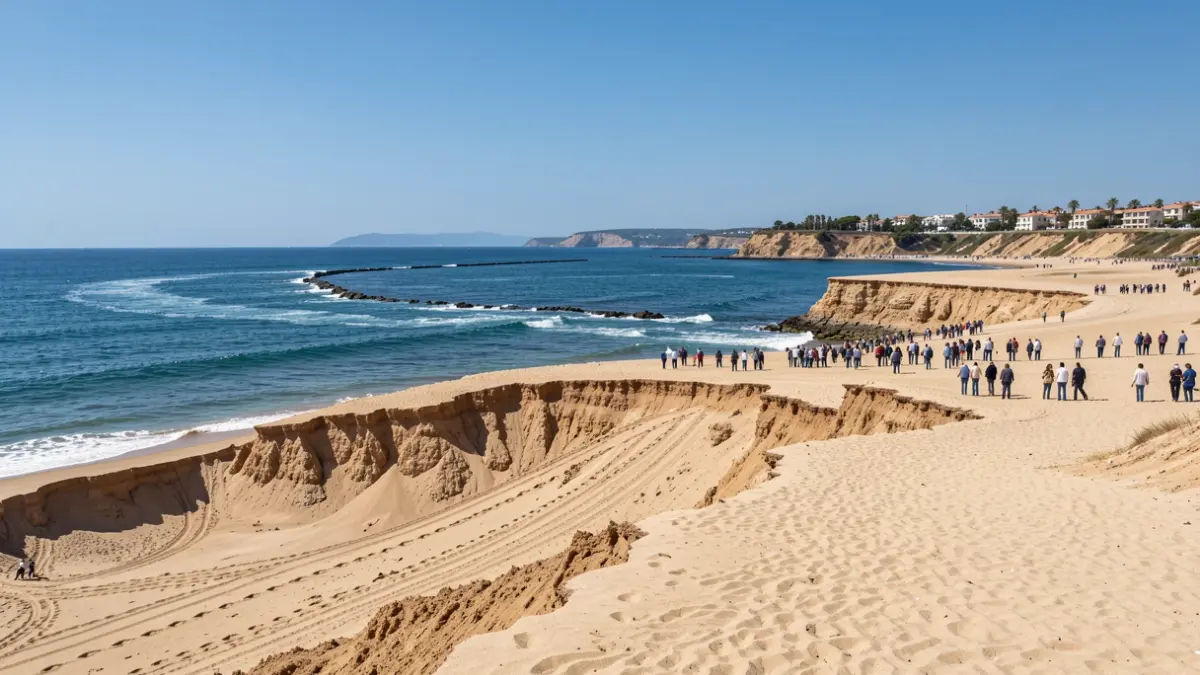
The objective is for this material, currently trapped in dams, to reach the lower river courses and aid in the recovery of sandy shores. This initiative is inspired by pilot tests conducted on the Ebro River.
One proposed method involves generating artificial floods by opening reservoir gates, provided weather conditions permit. The ACA already had a budget for sediment management, but drought prevented its execution. The project will proceed in the next planning cycle with an increased budget.
Mònica Bardina, head of the ACA's planning and environmental restoration department, stated the intention to incorporate the unspent budget and allocate more resources. Years ago, a small experiment was conducted to test the feasibility of moving sediments from the reservoir's tail to the dam for mobilization.
This operation requires two conditions: it must occur during a rainy period to conserve freshwater, and there must be sediments concentrated near the dam, which is not always the case as they are often found at the reservoir's tail.
Albert Rovira, an ACA technician, noted that releasing water from the bottom once a year is a possibility, but Mediterranean rainfall uncertainty limits this option. This system has been successfully tested in the Mequinenza, Riba-roja, and Flix reservoirs on the Ebro, although sediment transfer remains limited.
Catalonia's internal basins also suffer from a lack of sediments, crucial for maintaining the river-sea balance. While large reservoirs like Sau or Susqueda retain less sediment due to their location in upper river sections, the ACA is preparing projects for the Foix and Gaià reservoirs, situated in lower river sections.
In addition to controlled floods, plans include removing small, obsolete dams and weirs that obstruct natural sand flow. This approach signifies a shift in perspective, viewing sediments as part of the river rather than waste. Removing barriers also improves fish passage and ecosystem function.