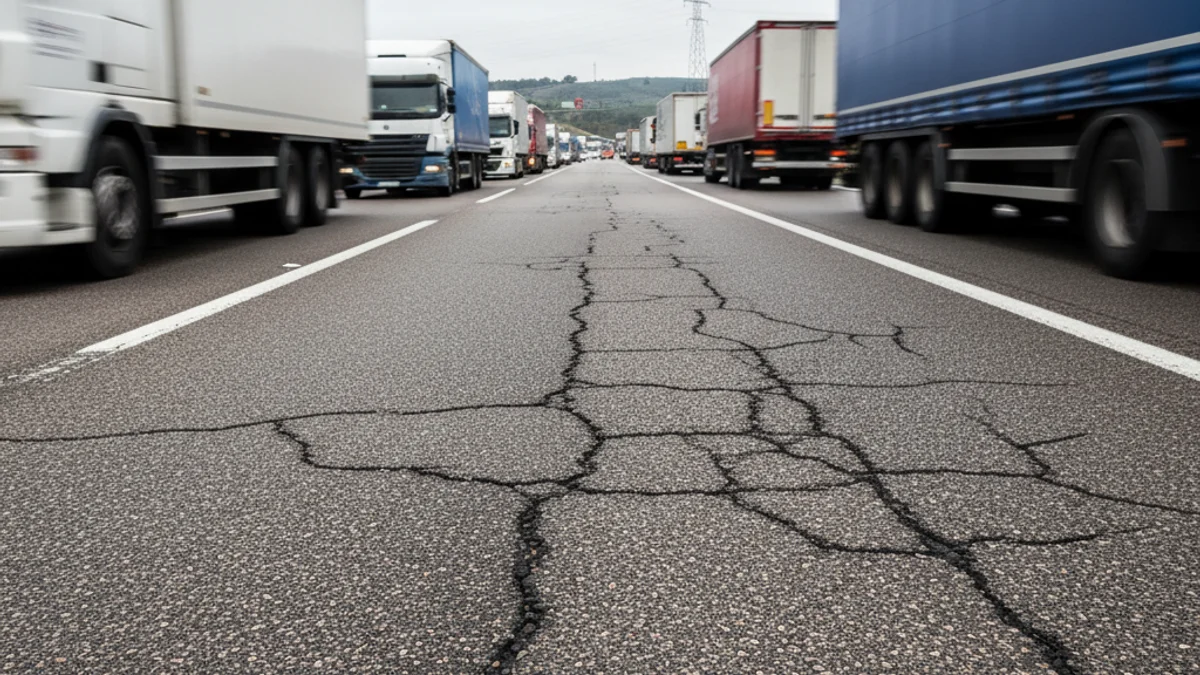
Since the AP-7 highway became toll-free in 2021, its state of conservation has drastically worsened, especially in the section crossing Alt Empordà up to the La Jonquera border. This route, essential for European freight transport, has seen a 70% increase in traffic.
The coexistence of passenger vehicles and the approximately 15,000 daily trucks circulating on the axis has turned the highway into an “extremely dangerous” route. This situation is attributed, according to various analyses, to the lack of investment in maintenance and conservation over the years, similar to what has occurred with the Rodalies rail network.
The pavement of the Autoroute 9 (A-9), the French toll highway that connects with the AP-7, is impeccable, while on Spanish territory the asphalt turns into an amalgamation of patches.
A recent report by David López Frias detailed that the Alt Empordà section presents “more than a hundred defects in the asphalt”. Given this situation, the debate has reopened regarding the possible return of tolls on the AP-7 to guarantee its maintenance, although this could divert heavy traffic onto the N-II, causing major congestion.