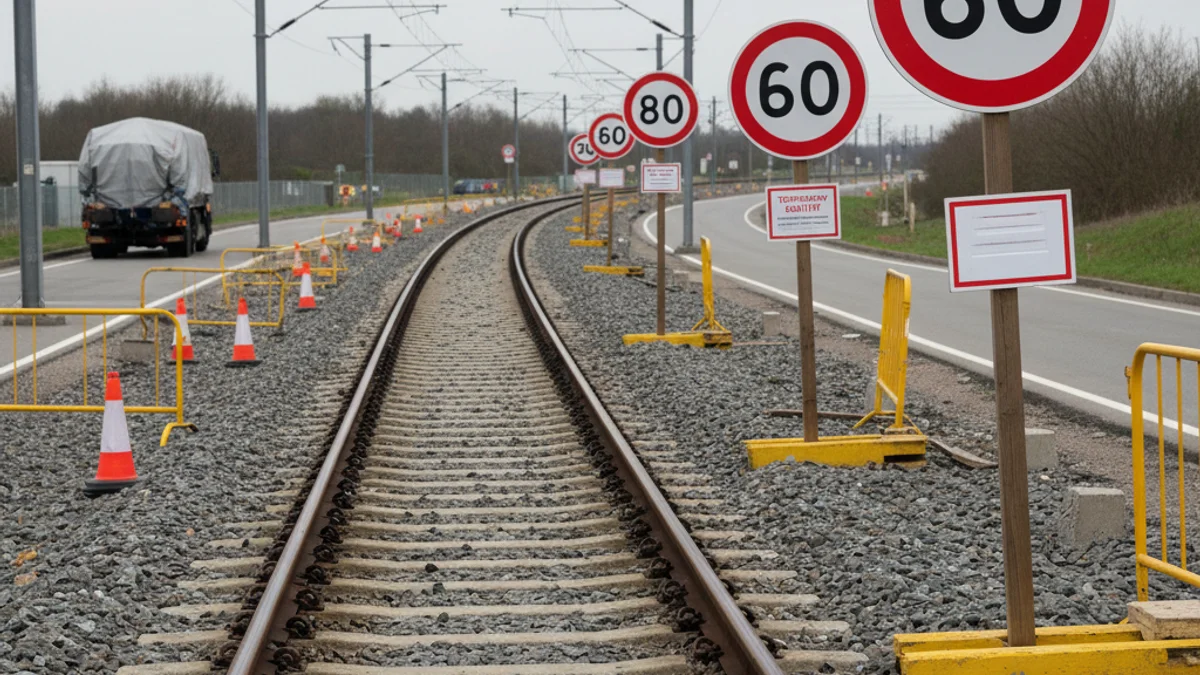
Iryo informed its customers that the usual compensation policies for delays will not apply to tickets purchased after the announcement. This measure is due to temporary speed limitations at various points on the network, announced by the infrastructure manager, ADIF.
The company argues that the delays, in these cases, are "alien to the operator's responsibility," a justification that the Organization of Consumers and Users (OCU) considers legitimate, as the law only imposes the duty of information on operators.
As a consequence of the temporary speed limitations at different points announced by the infrastructure manager (ADIF), the journeys may suffer delays alien to the operator's responsibility.
The OCU relies on EU Regulation 2021/782, which stipulates that there may be "extraordinary circumstances" causing the company not to be responsible for the delay. Article 19 of this regulation specifies that there is no right to compensation if the traveler is informed of the delay before purchasing the ticket, the clause Iryo is using as a shield.
For the moment, competitors Ouigo and Renfe, despite being subject to the same ADIF restrictions, have not taken similar steps to suspend compensation for their users traveling on the affected lines, which total nearly 13,000 daily passengers according to the CNMC.