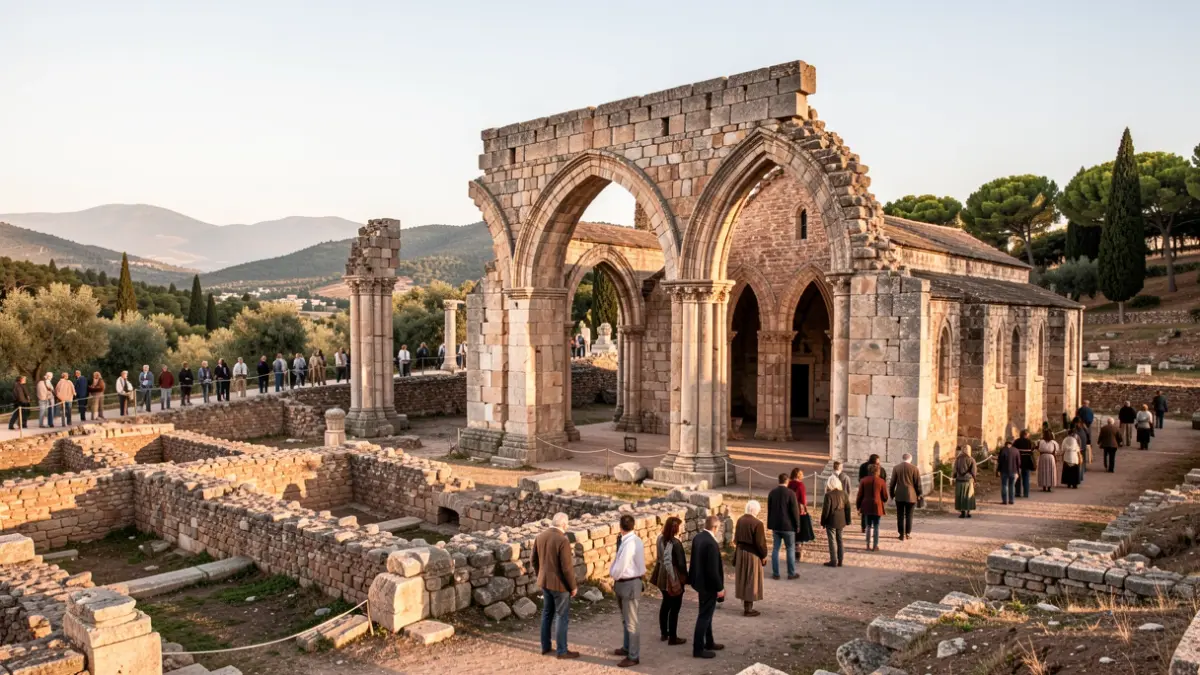
Rehabilitation works at Mas Montjoi de Baix, located in Roses (Alt Empordà), have led to the surprising discovery of two churches of Visigothic origin. Preliminary dating places these structures between the 7th and 9th centuries AD. According to the director of the archaeological intervention, Marcel Pujol, one of the churches appears to have been active during both the Visigothic and Carolingian periods. The other, dated to the 8th century, could correspond to a temple that was destroyed during the Muslim invasion and was never rebuilt.
These buildings were already mentioned in historical documents, but their material remains had not been located until now. Archaeologists believe the area may still hold new archaeological structures and await the drafting of a master plan to define future conservation and musealization efforts for the site.
The archaeological intervention at Mas Montjoi de Baix began six years ago, following the rehabilitation of the farmhouse, which is privately owned. The work has been carried out under the supervision of Heritage authorities, as the property is protected as a cultural asset of local interest and there was evidence of ancient remains in the area, located in the heart of the Cap de Creus Natural Park.
The dating has been established thanks to carbon-14 tests conducted on human remains found in tombs near the temples. These tests have been crucial, as little ceramic material was found that could help establish a more precise chronology.
One of the discovered temples was in use both before and after the arrival of the Muslims, as evidenced by the human remains found in its vicinity, including a burial from the 7th century and two children from the 9th century. The other church, according to documentary sources, could be the temple razed by the Muslims and never rebuilt.
Historical documents already pointed to the existence of a monastic complex in the area, divided into three religious buildings dedicated to Saint Michael the Archangel, the Savior, and the Virgin Mary. However, the location of these churches is a significant achievement, as many historians knew of these sources but had not found the archaeological remains.
The findings occurred during the farmhouse's development works. Besides the churches, a large water tank divided into sections has been located. The first church appeared a few meters from this cistern, detected by a structure made with lime mortar. The second was discovered during preliminary surveys for the construction of a wastewater tank, revealing its apse.
Archaeologists believe that the subsoil of the surrounding area may hide new structures linked to the monastery, such as annexes, cemeteries, or monks' dwellings. A master plan is now awaited to define future excavations and the criteria for conservation, restoration, and musealization of the space.