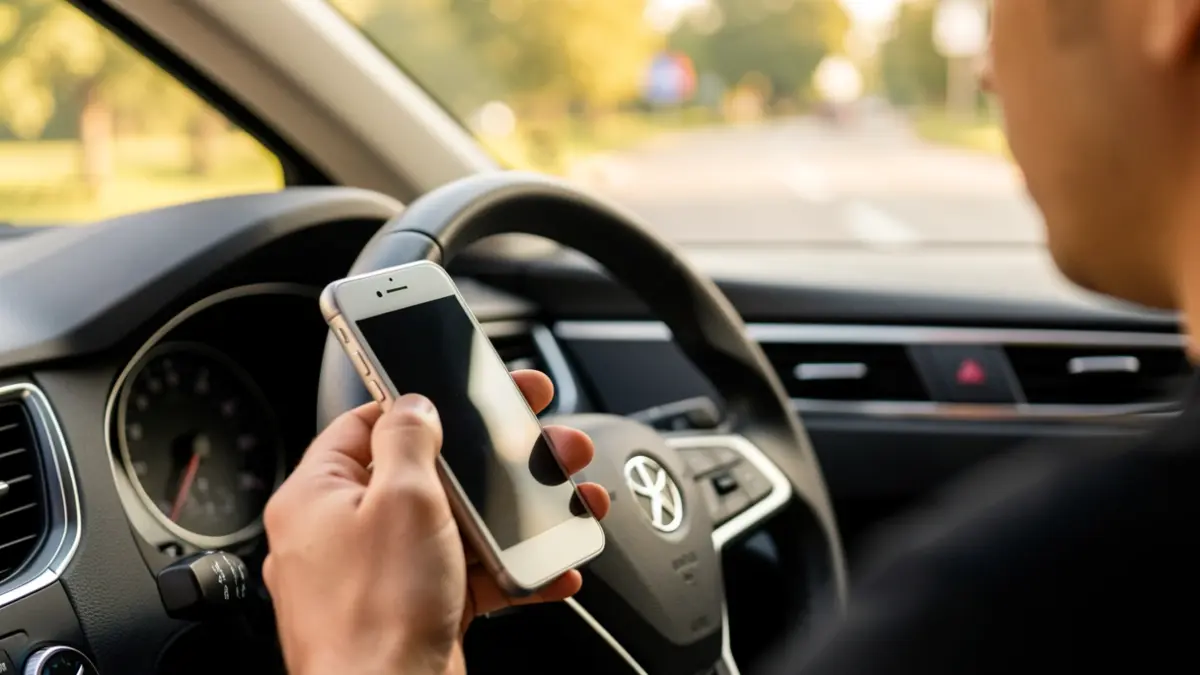
A pilot test conducted on the AP-7 and A-2 highways has demonstrated the effectiveness of a new artificial intelligence-based system for identifying drivers using mobile phones while driving or traveling without seatbelts. The preliminary results have prompted the Catalan Traffic Service (SCT) to consider its widespread implementation on Catalan roads.
The system utilizes a trailer equipped with two high-definition cameras and artificial intelligence algorithms. One of the cameras offers a top-down view, enabling the detection of violations such as using a mobile phone placed on the lap or a poorly adjusted seatbelt, situations that often go unnoticed in conventional checks.
During the testing phase, approximately 8,500 drivers were recorded using mobile phones, and around 4,500 violations related to seatbelt use were identified. Data indicates that between 3.6% and 6.6% of observed drivers used their mobile phones, while 1.3% to 1.8% were not wearing seatbelts or used them incorrectly.
In light of these findings, the SCT is analyzing the implementation of this technology as an additional tool to enhance road safety and combat frequent risky behaviors. Artificial intelligence promises to improve the efficiency of surveillance and violation detection.