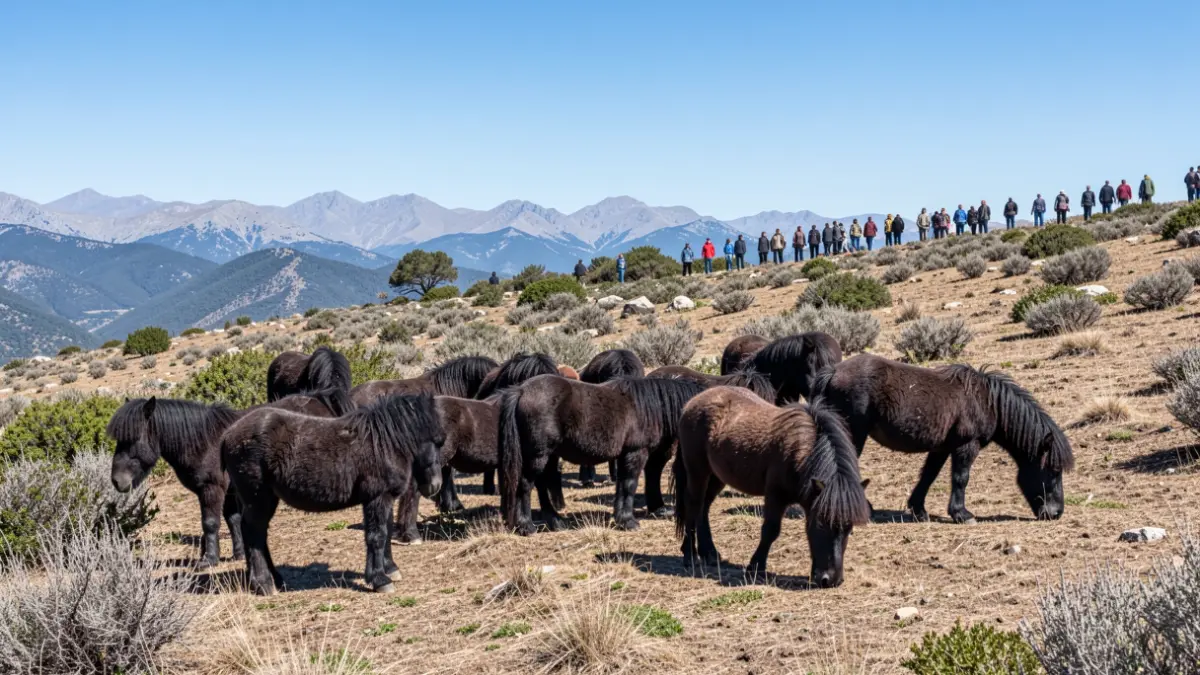
This project, previously implemented for eleven years in the Garraf Park, arrives in the Pyrenees with the goal of using equines as a key tool to reduce vegetation fuel load. Land abandonment and forest expansion have increased the fire risk in the area.
Pottoka, a rustic horse breed originating from the Basque Country, are ideal for forest environments. Their low weight prevents soil compaction and damage to structures like dry stone walls or terraces, common on mountain slopes.
The presence of these animals helps reduce accumulated vegetation, opens up spaces, and promotes biodiversity, including the proliferation of beneficial invertebrates for ecosystems.
“"They don't leave it nearly as clean."
Local farmer Agustí Porta, with prior experience with cows and sheep, highlights the effectiveness of pottoka, stating that in just two months they have cleared undergrowth that would have required human intervention. Residents have also positively noted the outcome, with land recovered after decades without management.
Rosa Galindo, president of the Fundació Miranda, explains that pottoka are genetically selected to live in forests, and their low weight makes them ideal for mountain territories like Alt Urgell, preventing soil erosion.
The foundation, managing over 5,000 hectares in Catalonia, aims to connect horses, people, and nature for territorial conservation, working with 80 horses rescued from abandonment situations.
The foundation calls on administrations for less bureaucracy and more support for extensive management projects as a tool for fire prevention and ecological restoration, especially in the context of climate emergency. Farmer Porta also laments the administrative hurdles that complicate these management efforts.