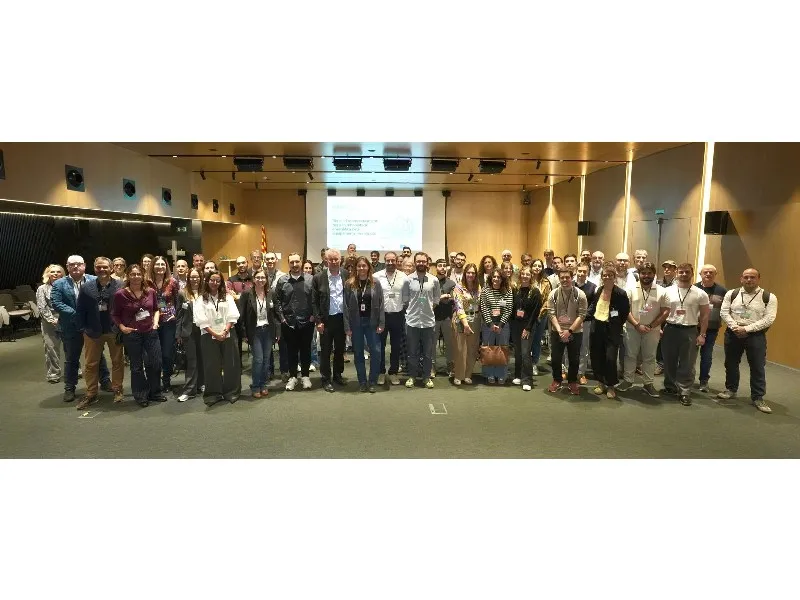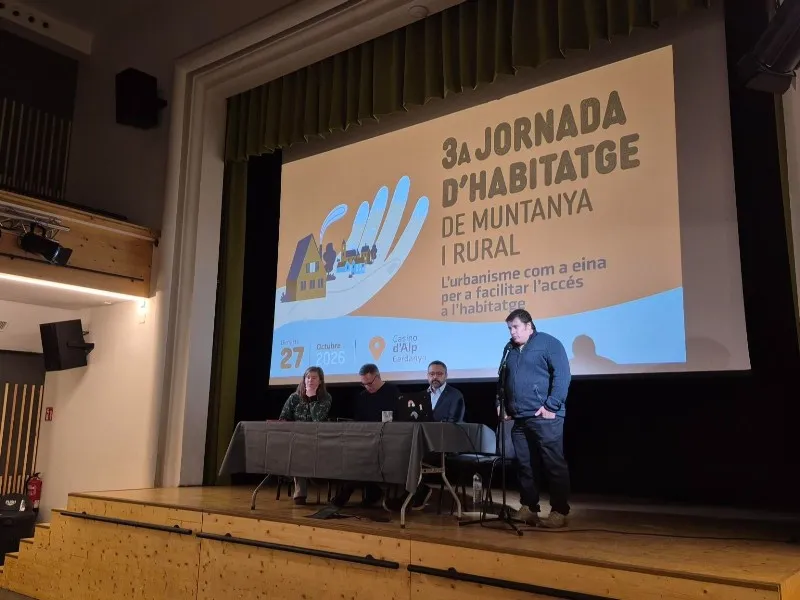
The Housing Board of Alt Pirineu and Aran, led by the Institute for the Development and Promotion of Alt Pirineu and Aran (IDAPA) and the Cooperative Athenaeum of Alt Pirineu and Aran, organized the third Mountain and Rural Housing Conference in Alp. The event brought together about sixty people to present the tools offered by the new urban planning regulations, specifically Decree Law 6/2026, of May 5, to facilitate the creation of housing and economic activities in rural and mountain municipalities.
This new regulation will allow the conversion of rural buildings without heritage value into primary residences, artisanal activities, agricultural or forestry product processing, liberal professions, or social facilities. Old population centers on non-developable land will also be recognized as rural settlements, allowing their renovation, expansion, and horizontal division, while respecting landscape integration. The new regulatory framework introduces simpler and more flexible urban planning instruments, such as the rural POUM (Municipal Urban Planning Plan), to facilitate settlement and economic development.
The director of IDAPA, David Vallvé, emphasized that "housing is undoubtedly one of the essential challenges for the country" and that in the Alt Pirineu i Aran region, the complexity is greater due to the geographical and demographic characteristics, requiring "adapted tools and solutions." The conference served to analyze these tools and discuss the difficulties faced by these territories.
The Decree Law creates two new tools: an inventory of buildings on non-developable land (distinct from the farmhouse catalog) for recoverable constructions, and the figure of rural settlements for old centers over 100 years old. Additionally, the rural POUM, a more agile planning instrument for moderate growth, is incorporated, and the reservation of land for public housing is made more flexible.
In terms of public procurement, the decree law simplifies procedures and deadlines, allowing joint tendering for project design and execution. It also enables Infraestructures de la Generalitat to act as a direct means for local entities, providing technical and management support.