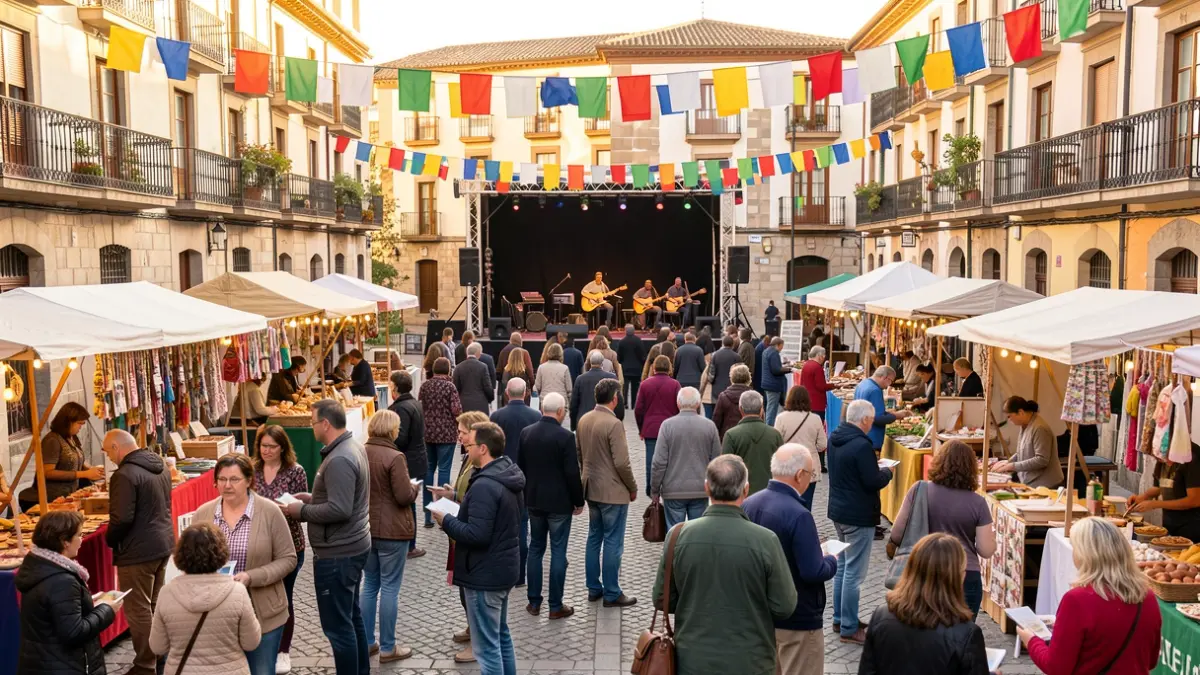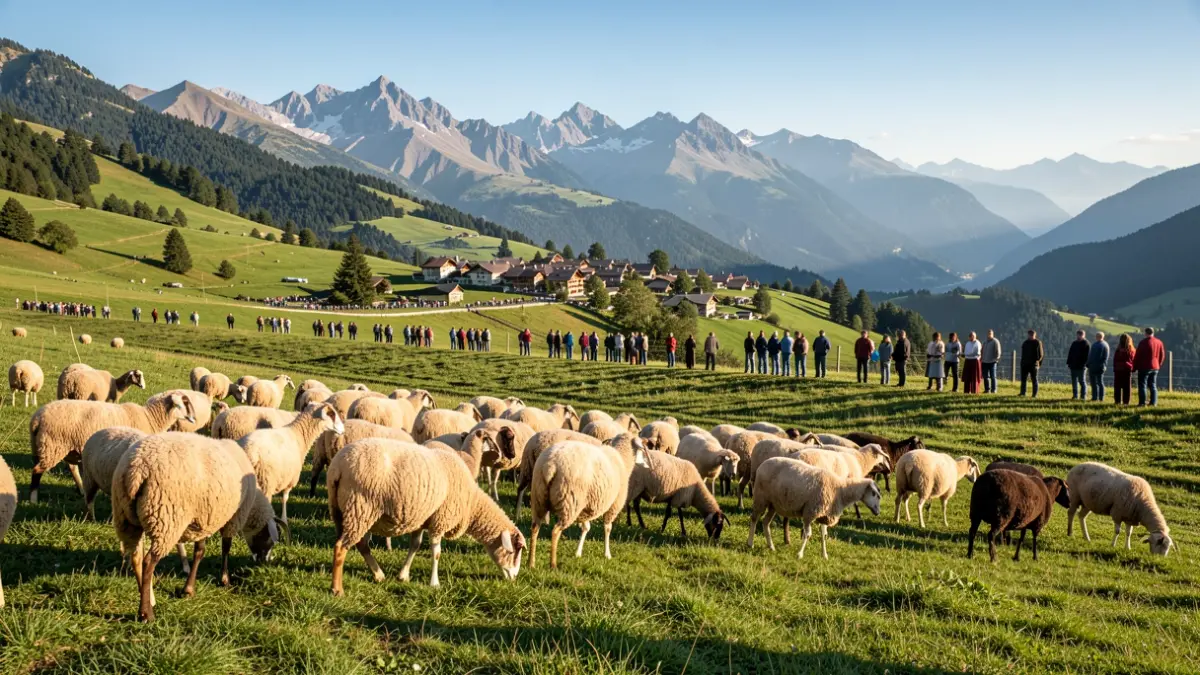
The event, organized by HèPic, the Vilamòs Town Council, and IRTA, with the collaboration of Aran pera Natura, combined technical presentations with educational, cultural, and family activities. The aim is to reflect on the importance of extensive livestock farming in landscape conservation, biodiversity, and fire prevention.
Oriòl Sala, Councilor for Innovation of the Conselh Generau d’Aran and Mayor of Vilamòs, highlighted that this edition seeks to raise awareness about the relevance of the primary sector in the face of forest fire risk, emphasizing vegetation control as a key element for ensuring people's safety.
Experts from various sectors addressed the challenges of extensive livestock farming from scientific, environmental, and territorial perspectives. Antoni Dalmau, an animal welfare researcher at IRTA and scientific coordinator of the Ovihuec.sost project, participated in a conversation with Guilhèm Piris, Head of Innovation at the Conselh Generau d’Aran, about how this practice contributes to more sustainable management of mountain landscapes and territories.
Dalmau explained that the Ovihuec.sost project integrates scientific knowledge, technology, and territorial management to analyze the impact of extensive livestock farming on vegetation, biodiversity, fire prevention, and animal welfare, as well as to highlight the ecosystem services provided by herds. He added that this knowledge should be used to develop replicable management models for other mountain territories.
The event also included a market for local products, family activities on biodiversity, workshops, cultural events, and a popular lunch made with lamb from the Ovihuec flock. The proceeds from the lunch will be entirely donated to the Association Against Cancer in the Val d’Aran.
The Ovihuec.sost project, driven by the Vilamòs Town Council, the Conselh Generau d’Aran, and IRTA, analyzes and validates extensive livestock farming as a tool for forest management and the provision of ecosystem services. It combines the management of a public flock of sheep and goats with technologies such as virtual barriers and geolocation to study their impact. The project is supported by the Biodiversity Foundation of the Ministry for Ecological Transition and the Demographic Challenge (MITECO), co-financed by the European Regional Development Fund (ERDF).