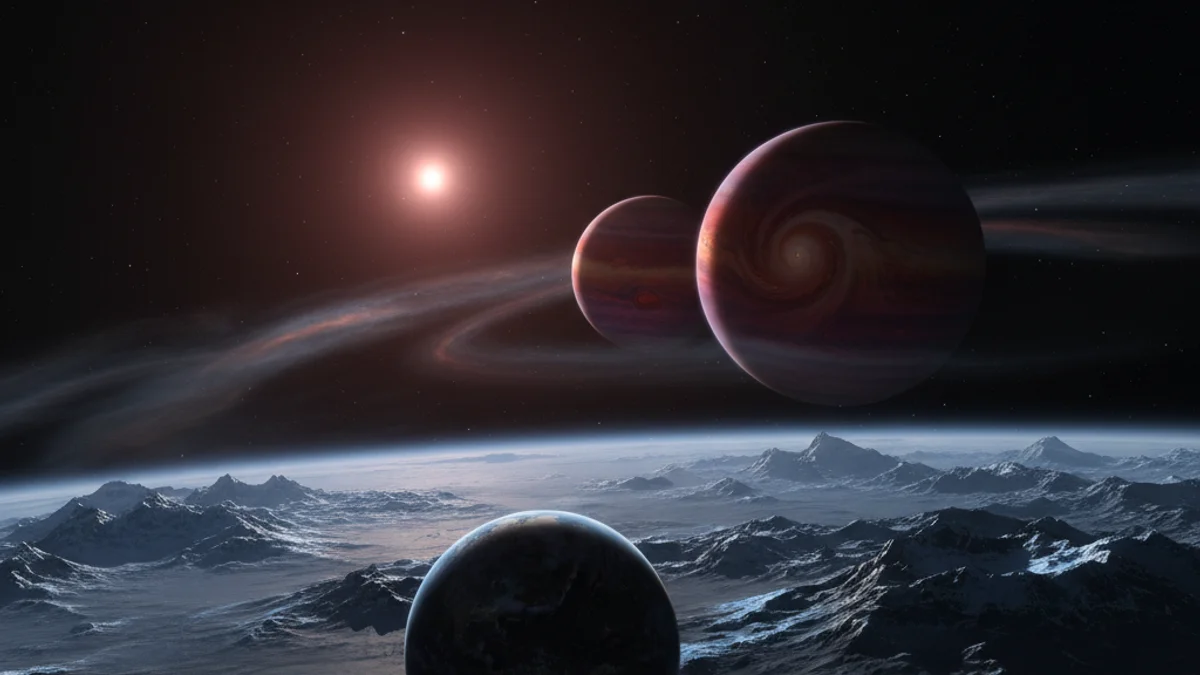
The international team discovered that the outermost planet in the LHS 1903 system is rocky, despite being located further away than two gas giants. This contradicts the standard model where rocky planets are situated closest to their host star due to radiation levels.
Using data from the ESA's Cheops satellite, researchers from the IEEC and CSIC suggest this system formed from the inside out. This implies that the planets were created sequentially rather than simultaneously, a theory proposed a decade ago but never before proven with such solid evidence.
“"As we see more and more different exoplanetary systems, we are beginning to revise these theories."
The existence of this small rocky world in a gas-depleted environment suggests that planetary formation is more diverse than previously thought, potentially making our own Solar System an outlier in the Universe.