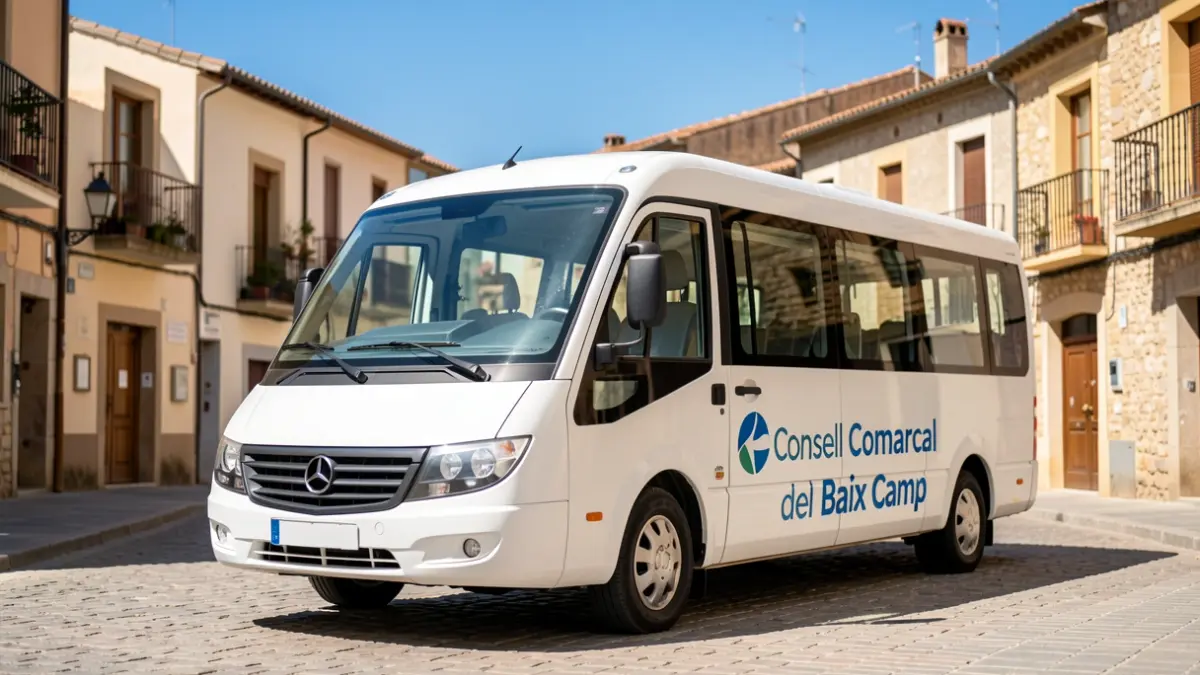
On September 1st, the Adapted Transport Service of the Consell Comarcal del Baix Camp will be reactivated. This service facilitates the travel of people with reduced mobility and/or with an accompanying person's allowance to specialized centers included in the social services portfolio and registered with the Public Network of the Generalitat de Catalunya.
The service is provided directly through collaboration between the Consell Comarcal del Baix Camp and the region's town councils, with the exception of the municipality of Reus. Funding comes from the 2026 Program Contract with the Department of Social Rights and Inclusion of the Generalitat de Catalunya.
For the 2026-2027 academic year, the service will cover 56 users, with plans to incorporate 4 new users throughout the year. Currently, it is organized through 10 daily routes covering approximately 2,500 kilometers each day, ensuring beneficiaries' access to specialized services.
The service is primarily operated with the Consell Comarcal's own resources (five adapted vehicles), although some routes are still managed by an external company. It is anticipated that, from 2027 onwards, 100% of the routes will be provided with in-house resources.
Users benefiting from the service come from the municipalities of l'Aleixar, Alforja, Botarell, Castellvell del Camp, Vandellòs i l'Hospitalet de l'Infant, les Borges del Camp, Maspujols, Mont-roig del Camp, Miami Platja, Riudecanyes, Riudoms, Vilanova d'Escornalbou, Vinyols i els Arcs, Cambrils, and Vilafortuny.
The Consell Comarcal provides this service to over 50% of the region's municipalities, making it a fundamental resource for ensuring equal opportunities and access to specialized social services. It is an interurban transport service connecting various municipalities in Baix Camp, contributing to the improved quality of life and autonomy of users and their families.
The Adapted Transport Service is part of the Consell Comarcal del Baix Camp's commitment to social inclusion, accessibility, and care for individuals with specific mobility needs, facilitating their access to specialized resources in the territory.