The action is part of the municipal Green City strategy and has a tender budget of 467,322.75 euros (VAT included). The project, drafted by Conchita Ruiz Terradillos and Gerard Yubero Sainz of GYS Arquitectura, seeks to convert the parking area into a pedestrian square with cultural, social, and environmental purposes.
Key objectives include improving pedestrian mobility, coexistence with public transport, increasing urban biodiversity, and better water management. The proposal reinforces the area's role as a mobility hub, maintaining existing bus stops and adding two new ones to better connect Passeig Sunyer and the Biblioteca Central Xavier Amorós.
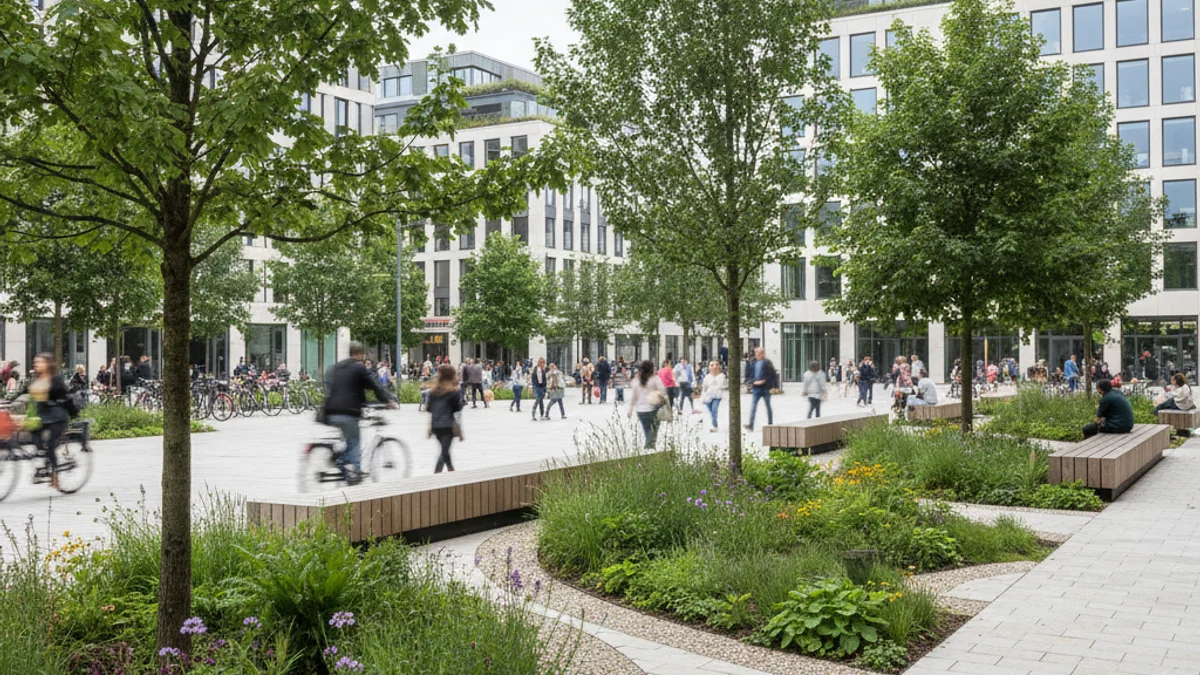
The new square is conceived as a space for relationship and coexistence, with open and flexible areas, small resting spots, and a new drinking water fountain for people and pets.
One of the most notable elements is the creation of an open-air agora-library, designed as an extension of the library to host cultural activities and community gatherings. Furthermore, the pavement design will use ceramic strips inspired by the façade of the Estació Enològica (Oenological Station), highlighting the architectural and cultural heritage of the area.
Regarding renaturalization, the project plans a significant increase in trees and vegetation using native species, configuring a multi-layered urban garden that will provide shade and climate comfort. The intervention also incorporates draining pavements and sustainable urban drainage systems to improve water cycle management.