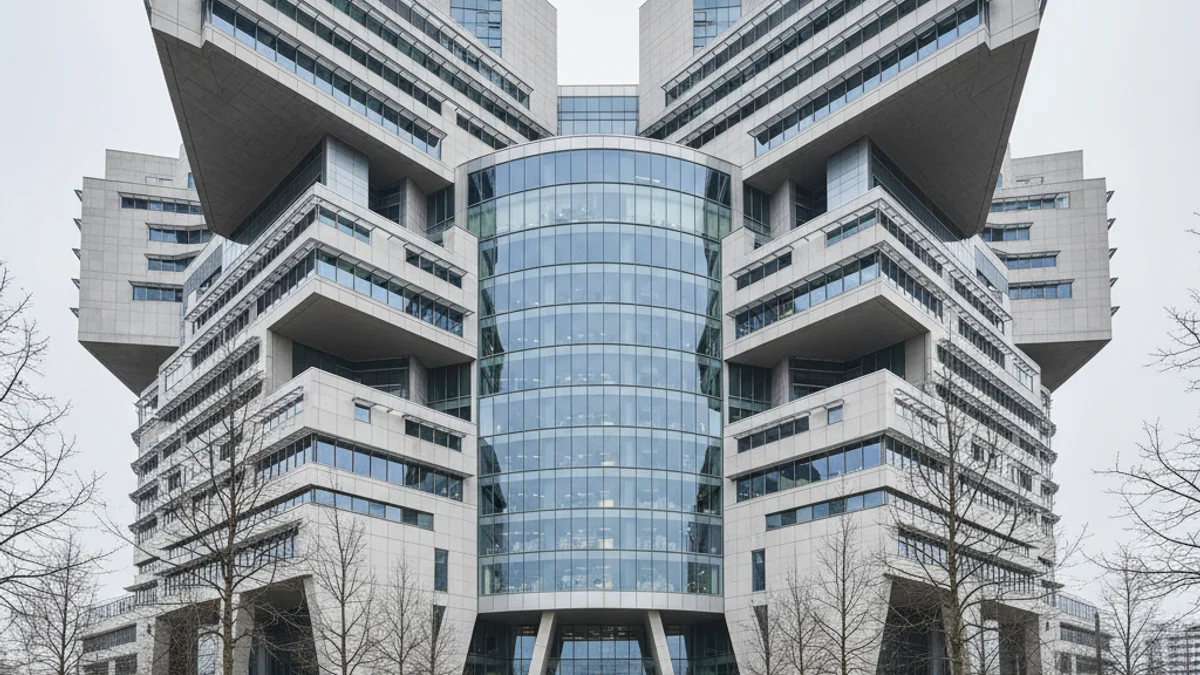
The exhibition, inaugurated last week, features informative panels on the history of the latest relocation, from Sant Joan street to Josep Laporte avenue, and the center's roots, which date back to the 13th century. Throughout the centuries, the hospital has undergone various location changes to adapt to population needs.
Among the most significant moments in its history is the incorporation of the Paüles nuns in the 18th century, which significantly improved the quality and quantity of services. Later, in 1981, it became the first municipal public limited company, a management model that allowed the Reus City Council to manage other public services.
This university character has been strengthened by the Faculty of Medicine and Health Sciences of the Universitat Rovira i Virgili (URV), inaugurated in November 1981. Although the nursing school had a short life (1975-1977) due to restrictive regulations, the faculty will soon expand its offerings with the Pharmacy specialty, consolidating a true health hub in Reus.
The health capital status is assured. And it has been proven that a timely retreat can be a victory.
The construction of the new center was driven by the political will of various municipal governments, especially those led by socialist mayors Josep Abelló and Lluís Miquel Pérez. However, the financial risk assumed was excessive, culminating in the transfer of management and debt to the Generalitat de Catalunya in April 2020, a key decision secured by republican councilors Noemí Llauradó and Òscar Subirats.
Despite current budgetary strain and the pending judicialization of the INNOVA case, the hospital continues to advance. Its continuity and its role as the cornerstone of the future health hub in Reus reinforce its health capital status in Camp de Tarragona, regardless of the change in management.