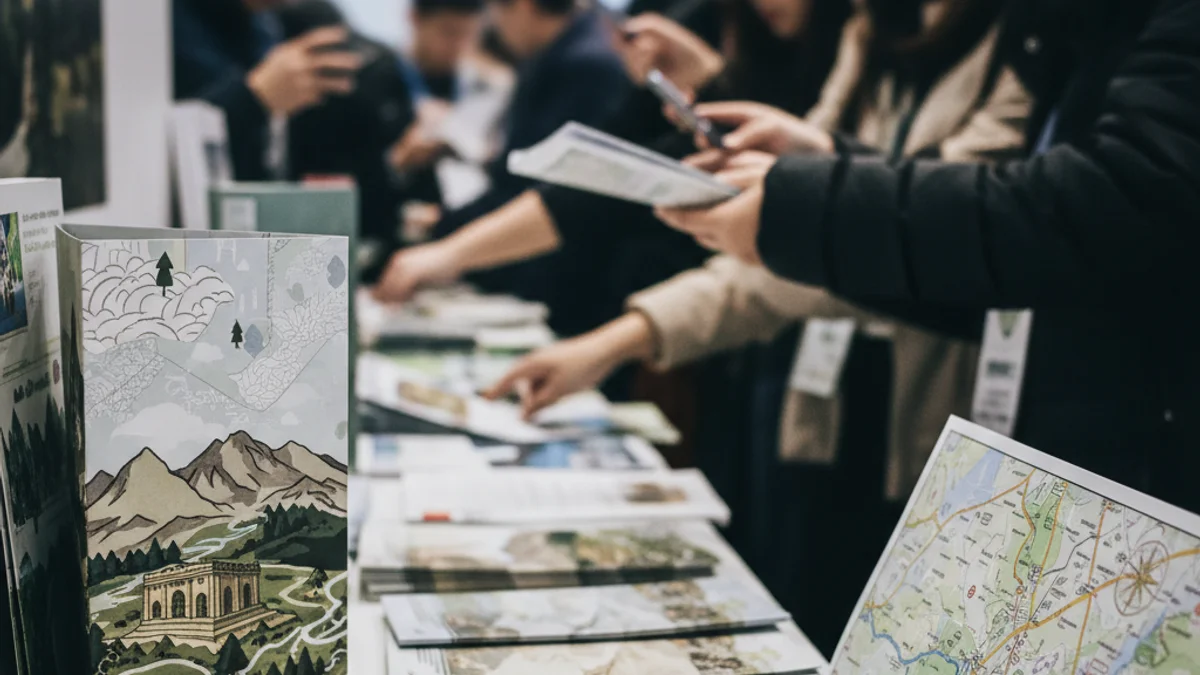
The Móra d’Ebre City Council participated for the third consecutive year in the International Tourism Fair (Fitur) in Madrid, aiming to strengthen its positioning as a destination for heritage, culture, and nature. The delegation sought to forge alliances with administrations and companies to accelerate projects such as the rehabilitation of the Castle, the development of the Julio Antonio Interpretation Center, urban routes, and the GR99 riverfront.
“"It is an unbeatable space to establish contacts with administrations, authorities, technicians, and companies to reinforce ourselves with new ideas for the projects we are advancing: the castle, the museum, and the routes."
Mayor Rubén Biarnés emphasized that the goal at Fitur was "to talk only about tourism, import best practices, and seek synergies to create new shared tourism products." Currently, the municipality is working on three main axes: the Julio Antonio Interpretation Center, which will be linked to an urban route; the GR99 route along the river facade and main street, oriented towards active tourism; and the Castle, where "a lot of money is being allocated to make it accessible" and turn it into a first-rate local resource.
Furthermore, within the framework of the fair, Biarnés met with the transport company Hife to convey several demands for improved communication. These included adjusting schedules requested by teachers at IES Julio Antonio to facilitate the use of public transport. Improvements were also requested for the afternoon service to Tortosa, and a new evening round-trip route to Barcelona was proposed, a line of work coordinated with mayors from neighboring regions to make a consensual claim before the Generalitat.