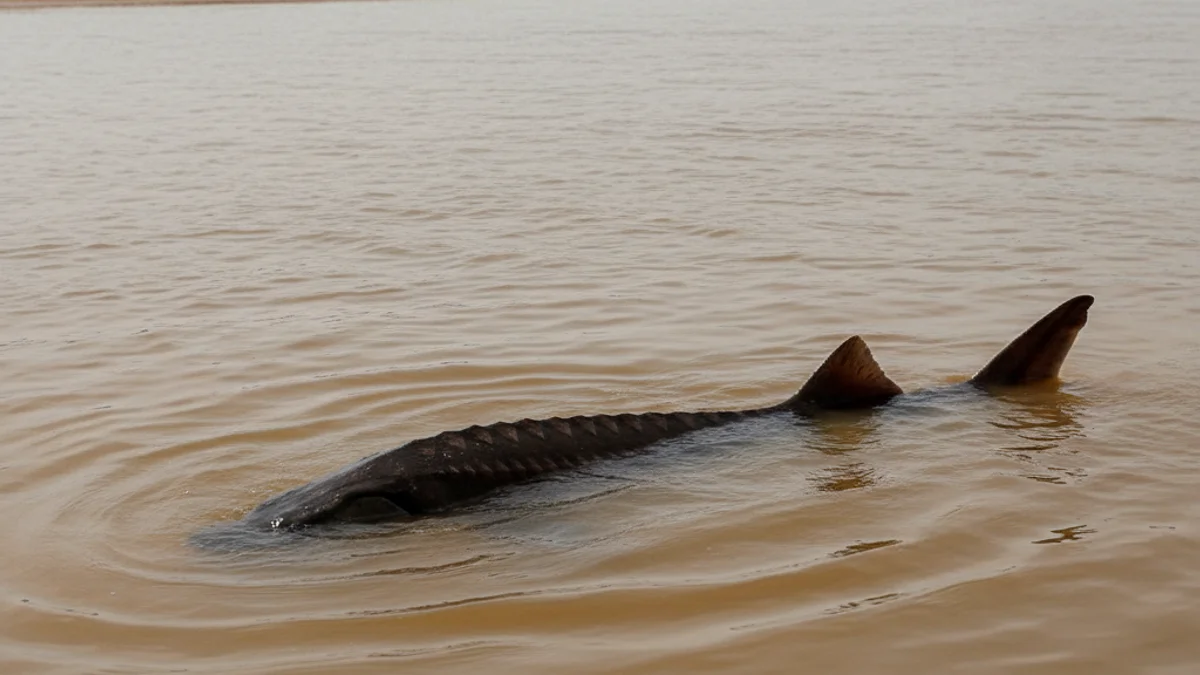
The two specimens recently located in L'Ampolla (Baix Ebre) and Peñíscola are part of the LIFE Migratoebre program, promoted by IDECE and CERM (Center for the Study of Mediterranean Rivers) at the University of Vic. This project aims to reintroduce the sturgeon to the Ebro River, a species that became extinct due to human activity.
For three years, fish of this species have been released in early winter to study their movements using tracking devices. Sturgeon fishing is prohibited, but accidental catch is not penalized. Fishermen who locate them, such as Xavi Cabrera in Fangar Bay and David Pozo in Peñíscola, receive a gift for their collaboration.
“"I saw a hawk lifting a fish and dropping it, and I noticed it wasn't a fish I was used to seeing regularly."
“"All the information that fishermen who find sturgeons can provide us helps us analyze their behavior and confirm that this program is working."
The project's scientific coordinator, Marc Ordeix, emphasized the importance of analyzing the causes of death and migratory routes. Although some specimens die due to lack of adaptation, the general behavior of the released sturgeons indicates they are living well in the river, dismissing concerns about interaction with species like the catfish (silur).