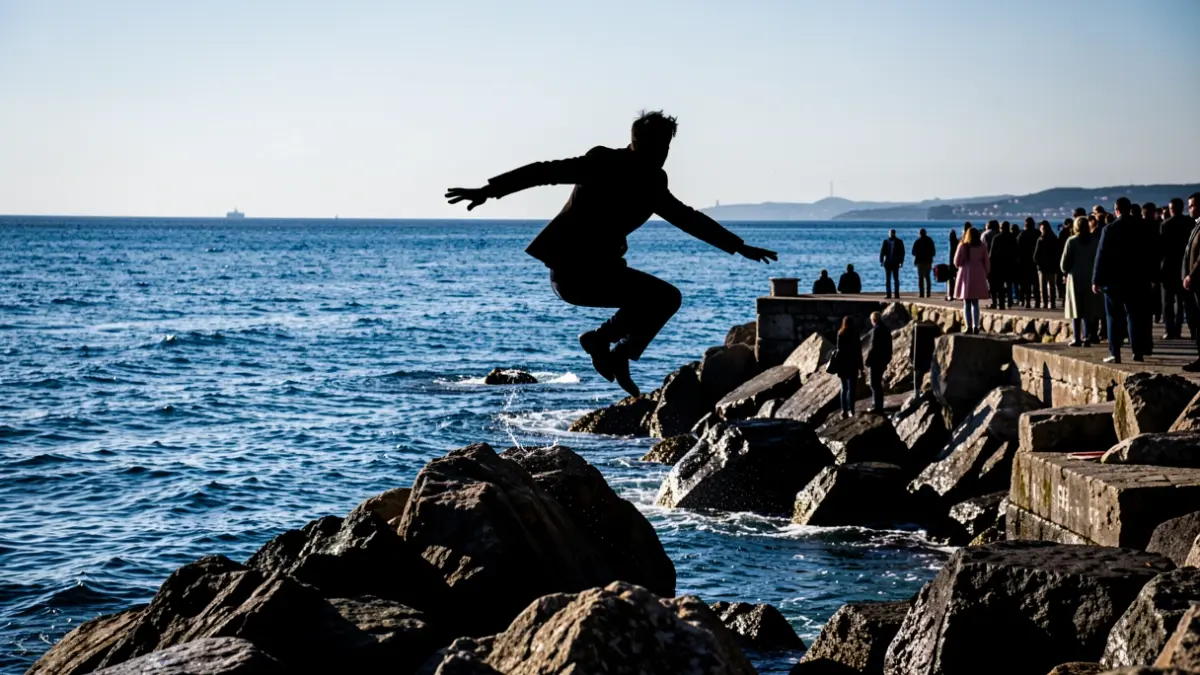
The fatal accident at Arrabassada beach in Tarragona, where three minors died after experiencing difficulties exiting the water in a rocky area known for sea jumping, has reopened the debate on the risks of such activities. Health specialists emphasize the need to go beyond surveillance or signage to raise awareness about the dangers.
Jumping into the sea from an elevated point like a rock or breakwater can lead to serious consequences such as head trauma, cervical fractures, or spinal cord injuries. Pierre Escobar, a neurosurgeon at Clínica Girona and Josep Trueta Hospital, explains that the impact against the water, depending on the height and manner of the fall, can act like a solid wall.
Escobar notes that during the summer, these types of traumatic injuries increase due to greater water activity, more swimmers and tourists, and exposure to risky behaviors. Ignorance, overconfidence, or alcohol consumption are key factors. In the case of rocks, the danger is exacerbated by the difficulty in perceiving depth and the presence of submerged stones.
“"It's not worth it, for a second of adrenaline, to live your whole life with a permanent injury."
The neurosurgeon has already treated two cases of rock jumps at Trueta in June, one with a cervical fracture. Last year, he treated between 15 and 20 cases of spinal cord injuries. The message is clear: jumping from a rock offers no benefit and can lead to severe, life-altering consequences.
The healthcare pressure in the Emergency Department of Josep Trueta Hospital also increases in summer. Its head, Maria Àngels Gispert, indicates that the reference population increases from 800,000 to 1.2 million people. In 2025, 14 people were admitted for drowning incidents, ten women and four men, with an average age of 33, a higher figure than in previous years. By the end of June this year (2026), two cases have been treated.
Gispert warns that these figures might be underestimated, as not all water-related accidents are strictly recorded as drownings; they can include trauma, injuries from falls on rocks, or accidents on boats. Patients with suspected decompression sickness are also referred to centers with hyperbaric chambers.
Trueta is a reference hospital for polytrauma patients and receives complex injuries related to accidents in bathing areas. According to El Periódico, approximately 6% of traumatic spinal cord injuries in Spain are caused by reckless jumps, amounting to about sixty cases annually.
“"When someone jumps from a rock, they never know what they will find underneath."