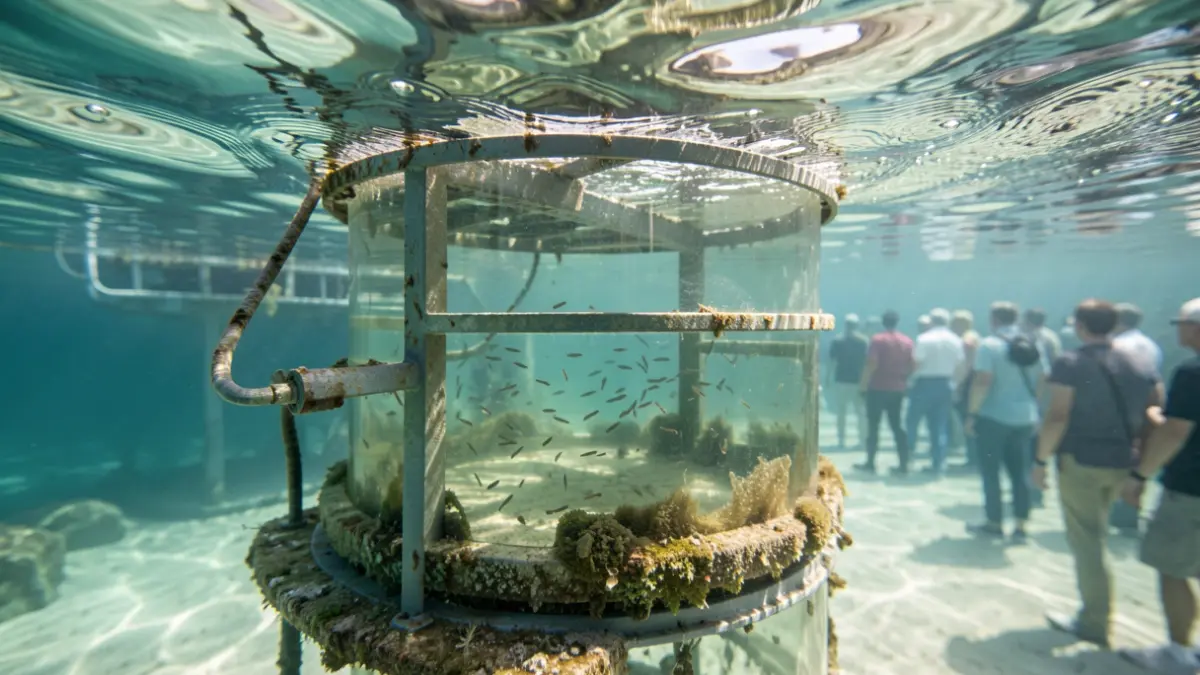
The initiative, named Repoblem el Mar-MarViu, aims to reverse biodiversity loss in the area. This system, already successfully tested in Roussillon, increases larval survival by over 40% thanks to a controlled environment within specialized containers.
The project relies on a scientific database identifying key species for the Mediterranean ecosystem. Furthermore, an environmental DNA monitoring system will be implemented, allowing both researchers and the general public to track the progress of juveniles released in the Bay of Palamós and around the Illes Formigues.
This action aligns with the European Green Deal and the 2030 Biodiversity Strategy. With a budget of one million euros, partially funded by the ERDF, the project seeks to strengthen the fishing sector's resilience against the impacts of climate change.