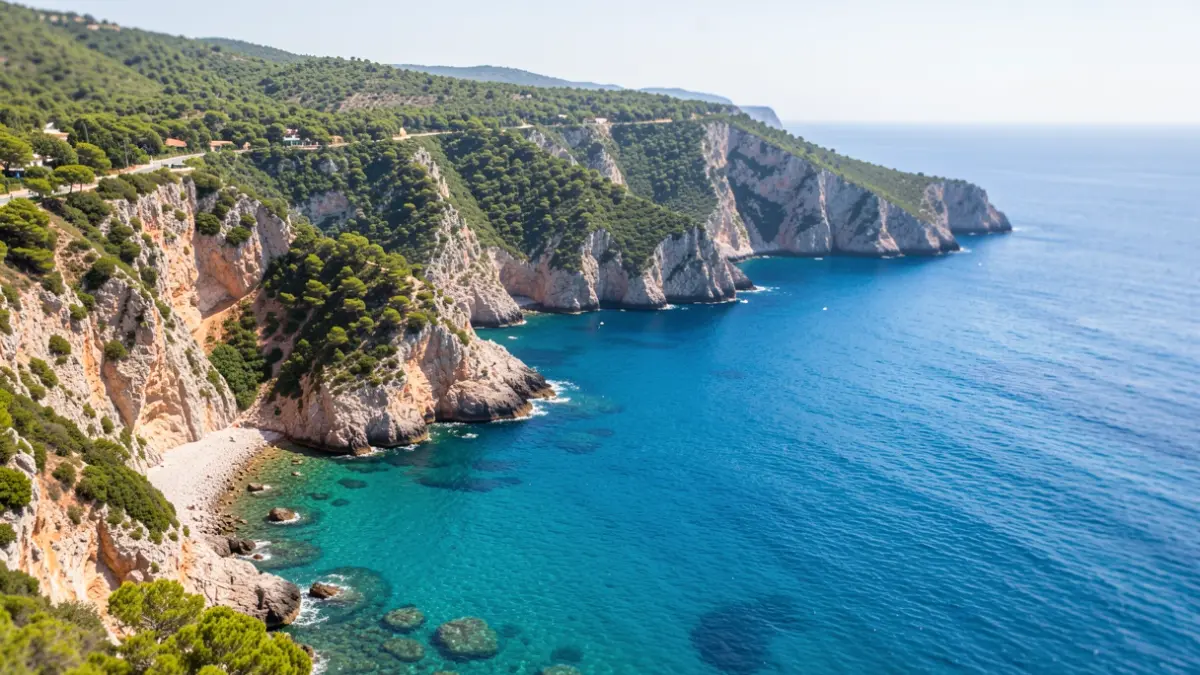
The Costa Brava, a 214-kilometer coastline stretching from Blanes to Portbou, is a popular tourist destination for its numerous coves and picturesque villages. This 2025, 27 beaches in the province have earned the blue flag, recognizing their environmental quality, safety, and services.
Beyond the beaches, the Costa Brava offers natural spaces such as the parks of Cap de Creus, Aiguamolls de l’Empordà, and the Montgrí, Illes Medes, and Baix Ter. However, the history of this coastal strip also reveals significant territorial changes, with former municipalities that no longer exist as separate entities.
Municipalities like Castell d’Empordà and Fonteta disappeared from the census decades ago. Castell d’Empordà, which once had 200 inhabitants in the mid-19th century and has Roman origins, became a population entity of la Bisbal d'Empordà in 1972. Meanwhile, Fonteta, along with Vulpellac and Peratallada, formed the municipality of Forallac in 1977 in the Baix Empordà.
A particular case is that of Peratallada, which, although well-known, is actually a village within Forallac. Other examples include Sant Joan de Palamós, which was incorporated into Palamós in 1942, and Casavells, which ceased to be independent in 1969 to integrate into Corçà with the hamlets of Cassà de Pelràs and Matajudaica.
There have also been cases of independence, such as the secession of Sant Julià del Llor i Bonmatí from Amer (la Selva) in 1983. These administrative modifications are common in Catalonia, like the recent creation of Lluçanès in 2023 or the incorporation of Aiguafreda into Bages (formerly Vallès Oriental) in July of this year.