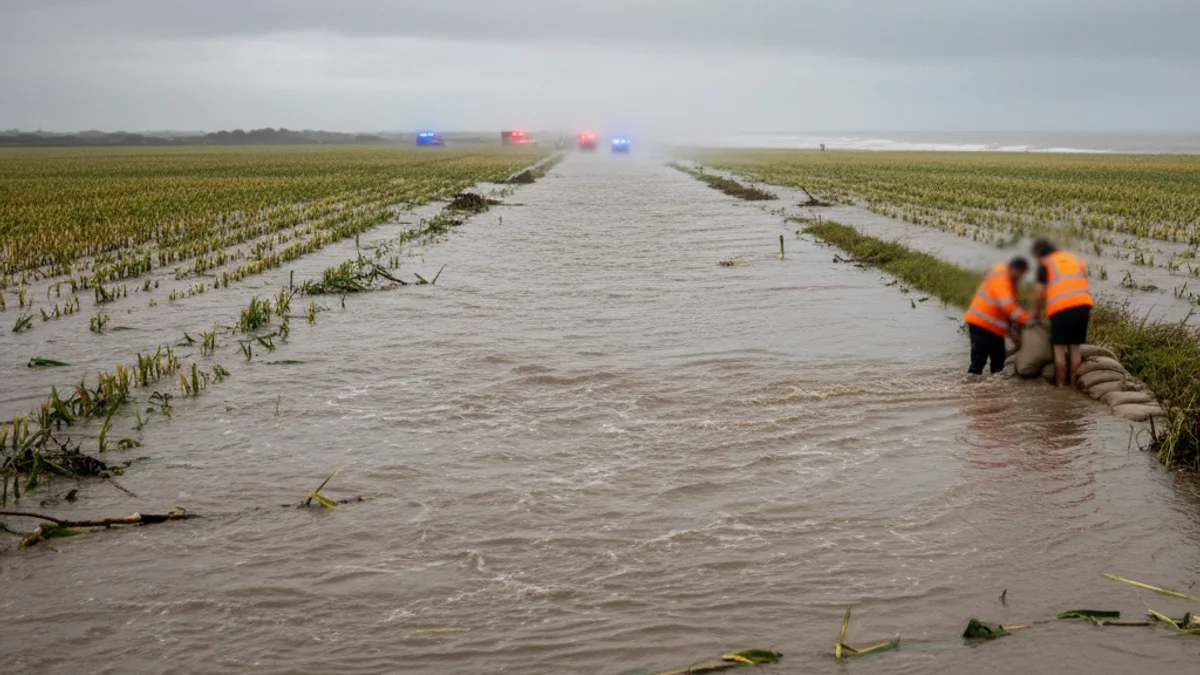
The most significant impacts were concentrated in municipalities such as Torroella de Montgrí, Serra de Daró, and Gualta, which were almost cut off due to the flooding of main access roads. The Mossos d’Esquadra closed the C-31 near Ullà, and the Guàrdia Civil did the same on the GI-643 near Parlavà. In Verges, the Ter river overflowed, flooding numerous agricultural fields.
“"The most critical moment of the Daró river overflowing has already passed."
In La Bisbal d’Empordà, Mayor Òscar Aparicio confirmed that the flow of the Daró river exceeded 500 cubic meters per second early in the morning, although it had dropped by midday. The council had to close access points to the river and cancel extracurricular activities, warning citizens not to approach the riverbed for photographs.
Rainfall records were historic. In Torroella de Montgrí (145.9 l/m²) and Castell d’Aro (118.5 l/m²), Tuesday was the wettest day in the last 20 years, according to Meteocat. L’Estartit accumulated 163 millimeters by noon. The sea storm was also extreme, with waves reaching nearly 9 meters at the Cap de Begur buoy and a maximum peak of 10 meters at 08:00 AM.
Due to the high flow and impassable access routes, the Bombers de la Generalitat (Firefighters) and Mossos d’Esquadra had to temporarily suspend the search for a man swept away by a stream in Palau-sator. Protecció Civil (Civil Protection) activated a new ES-Alert to extend mobility restrictions in Alt and Baix Empordà until midnight.