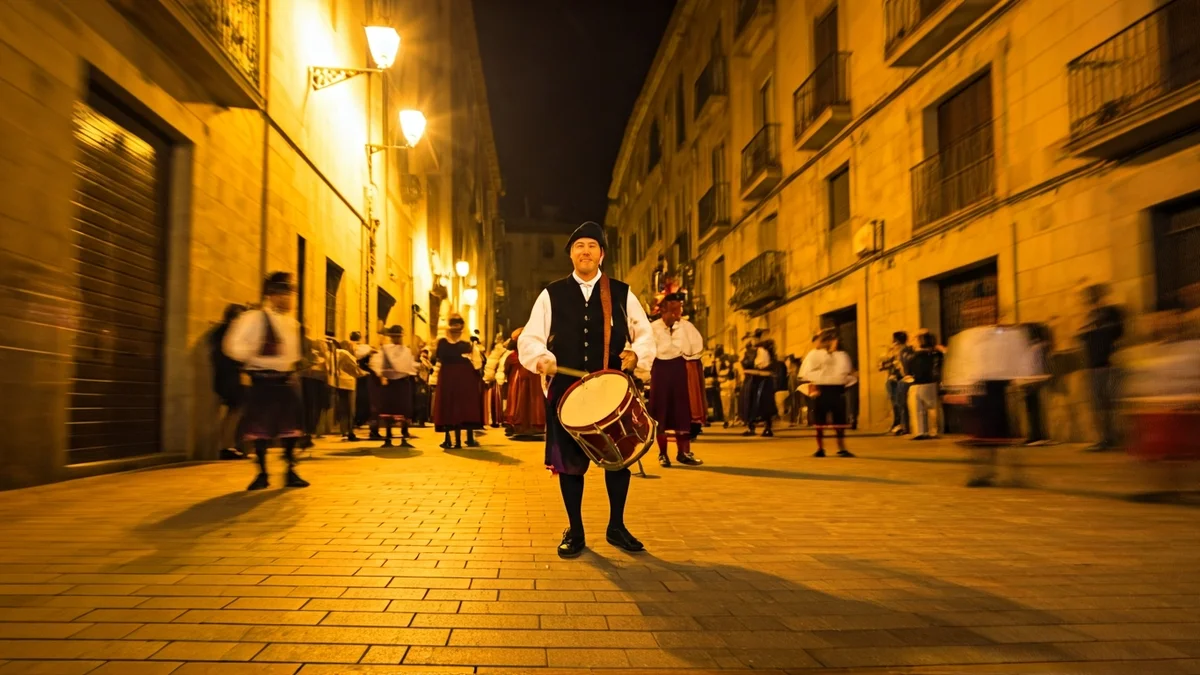
Every Holy Thursday, the town of Verges transforms into the setting for a representation that goes beyond religious commemoration. Its famous Dance of Death, with skeletons advancing to the rhythm of the drum, symbolizes the inevitability of death and its universality, becoming a central element of local identity.
“"This treatment of death is one of the features that define the Verges procession. Here it does not take a back seat, but is shown directly, with a very specific staging that has been passed down from generation to generation."
The organization of the procession is the result of intense collective work that spans months, with the active involvement of residents and participants in rehearsals and preparations. This civic participation is fundamental for the continuity and dynamism of the tradition.
With the aim of preserving and projecting this heritage, the creation of a chair is being studied to act as a bridge between tradition and modernity. This initiative will allow documenting the origins, evolution, and meaning of the procession within popular culture, while strengthening its local and international projection.
The ability of the Verges Procession to maintain a delicate balance between fidelity to its origins and the incorporation of new perspectives is key to its future. The involvement of the community and the generation of interest among new generations ensure the survival of this unique tradition, demonstrating that death can be a cultural driving force.
The popularity of the event is reflected in the high demand for tickets, which sell out quickly every year, confirming the public's constant interest in this cultural manifestation.