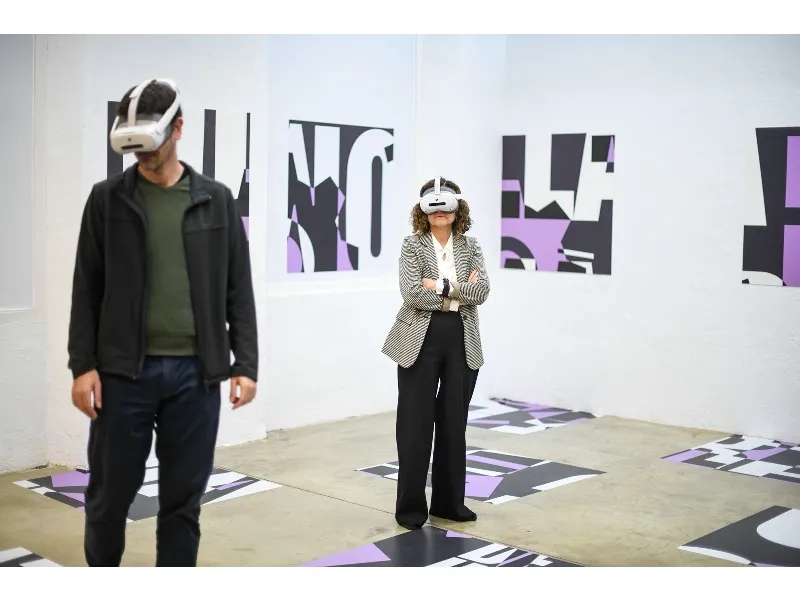
The new museographic proposal at the Museum of the Sedó Colony in Esparreguera, part of the National Museum of Science and Technology of Catalonia (MNACTEC), enriches the visit to this industrial textile complex. The project ‘The Eyes of History’ integrates augmented reality into the historical model, an immersive installation called Cor d’aigua (Heart of Water), and a virtual reality experience that transports visitors to the colony in 1936.
Minister Sònia Hernández highlighted that the initiative "broadens its view of Catalan industrial heritage" and "opens access and knowledge to new audiences", allowing an understanding of the colony as a system where "territory, water, production, and daily life were profoundly interconnected". Hernández also emphasized how the project "puts technology at the service of heritage and memory", recovering "everyday stories, family memories, and voices" to explain industrialization from a human and social dimension.
The immersive experience narrates the story of Mar, who discovers the life of her grandfather Pep and great-grandmother Teresa, offering insights into working conditions, education, and family life during a period marked by the Civil War. The Sedó Colony, founded in 1846, evolved into an industrial complex integrating the factory, housing, school, church, and leisure spaces.
The new museography explains the cotton production process, from the power of water driving the Francis turbine (one of Europe's largest visitable turbines) to spinning, weaving, and finishing. The colony's model, built in 1947, is complemented by augmented reality for exploring historical photographs and animated scenes.
To coincide with the reopening, on the weekends of November 7th and 8th, and 14th and 15th, the Museum of the Sedó Colony will host open house days featuring the virtual reality experience, with prior booking required via the website museucoloniasedo.cat.
The project ‘The Eyes of History’, which has already been visited by 290,257 people as of October 2026, has been implemented in other Catalan heritage sites and aims to deepen the relationship between technology, memory, and cultural landscape, giving voice to minority histories.