In the last year, the map compiled by the Directorate General of Democratic Memory of the Department of Justice has added about forty new sites, mainly in the combat zones of the Segre and Ebro. These locations may contain remains of those who died in battle, field hospitals, were murdered in the rearguard, or executed by the Francoist dictatorship.
“"It's quite an incredible figure, considering that in 2003 or 2004, when only 17 had been documented, it was thought that this would be resolved in no time."
The number of graves began to grow exponentially from 2017, with the implementation of the first systematic search plan by the Generalitat. Although over a thousand graves have been documented, it is estimated that only half can be intervened, as many have disappeared, been built over, vandalized, or their remains were transferred to the Valle de los Caídos (now the Valley of Cuelgamuros) during the dictatorship, according to Francesc Xavier Menéndez, director general of Democratic Memory.
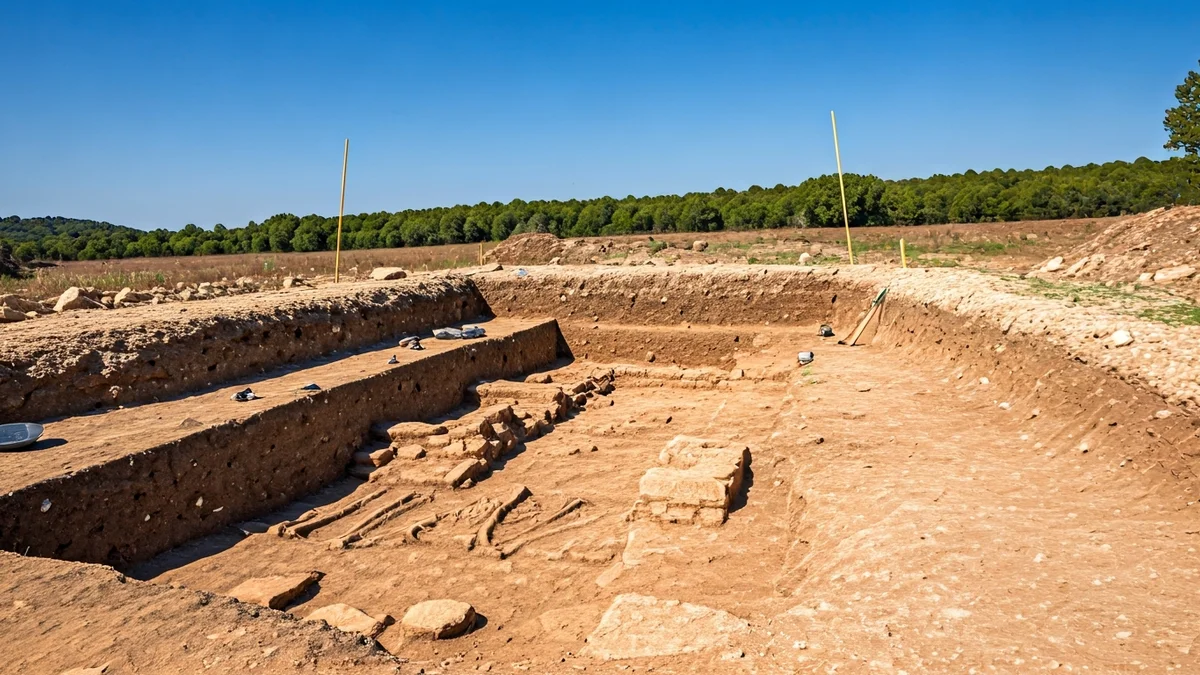
The exhumation work, initiated by the Republican Generalitat during the Civil War itself, has accelerated in the last nine years, with 113 graves uncovered, 60 of which were between 2023 and 2025. Interventions have taken place in towns such as Ascó, Miravet, Gandesa, Ullastrell, La Bisbal de Montsant, Castellnou de Bages, Artesa de Segre, and Abrera. Currently, graves are being excavated daily, often simultaneously.
The priority for excavations is based on the location and documentation of the graves, the risk of disappearance, and, crucially, the availability of DNA samples from relatives to cross-reference with the remains. An example of this prioritization is the excavation of the repression grave in Abrera, where 15 bodies of those repressed by Francoism were recovered in late 2025. The goal is to return these remains to their families, as was done last year with the Republican soldier Julio Lizana, buried in the Claravalls cemetery (Urgell) 87 years after his death.