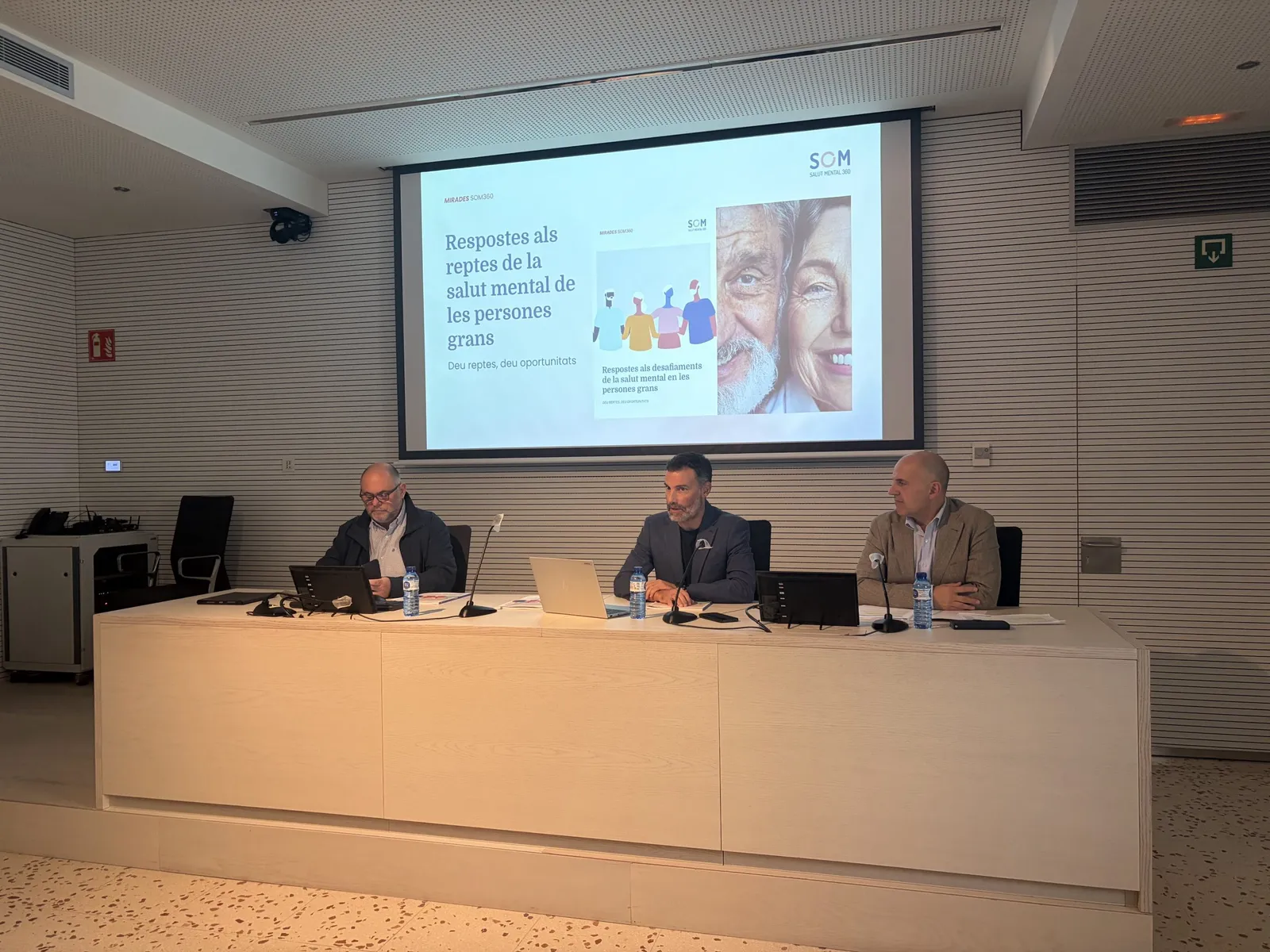
The aging population presents significant challenges for healthcare and social systems, particularly in the mental health care of the elderly. The report Mirades: Respostes als reptes de la salut mental en les persones grans, compiled by the Som Salut Mental 360 platform with expert input and coordinated by Parc Sanitari Sant Joan de Déu and Fundació Hospitalàries, indicates that 20% of individuals over 60 suffer from a mental or neurological health issue.
Data from the document shows that depressive disorders affect between 10% and 15% of older adults, while anxiety impacts 17%. Furthermore, it is projected that 42% of individuals over 55 will develop some form of dementia during their lifetime, highlighting the urgent need to adapt care services.
Geriatrician Pedro J. Regalado, who contributed to the dossier, pointed out the access difficulties for the elderly to specialized resources, such as a shortage of psychogeriatric professionals and the exclusion of some rehabilitation programs due to comorbidities. The need to improve coordination between health and social services to ensure continuity of care was also emphasized.
The primary challenge, according to experts, is not just having more resources but better connecting existing ones and organizing care around individual needs, integrating physical health, mental health, and social requirements. Parc Sanitari Sant Joan de Déu is already working on this through Intermediate Care and territorial coordination models.
The dossier also addresses social factors like loneliness, which affects one in three older adults, and suicide, with 32% of related deaths occurring in those over 65. Ageism and the stigma associated with mental health problems exacerbate the vulnerability of this group, necessitating more tailored care and enhanced professional training.
The report advocates for a shift towards a more preventive and predictive model, person-centered, combining early detection, health and social coordination, and continuity of care to preserve the autonomy and dignity of older individuals.