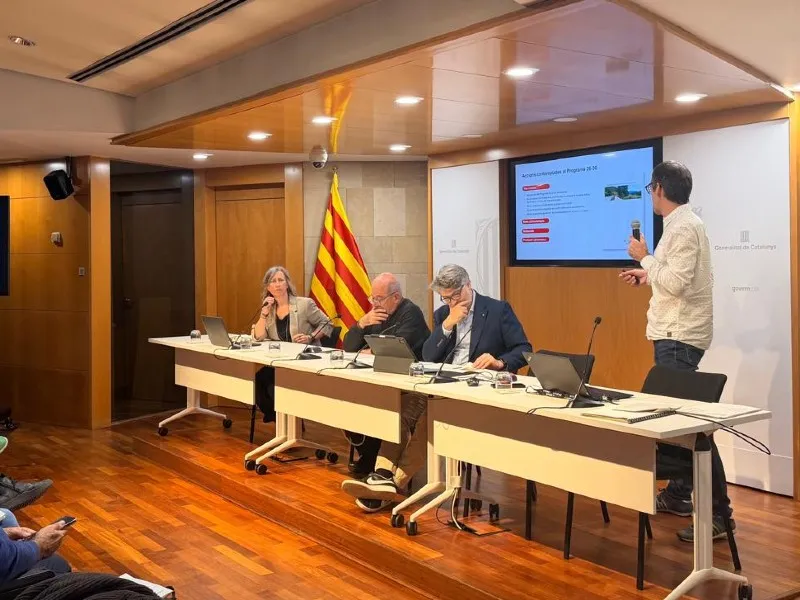
This information was shared during this week's meeting of the Bicycle Board, a participatory body bringing together administrations, entities, sector companies and civil society representatives to improve the promotion of this transport mode. The Generalitat explained that the current 60 km represent a quarter of the total planned for the current programme.
Regarding the near future, the department detailed that projects for the construction of 190 km more are already drafted or in the drafting phase, involving an additional investment of €140 million. The Bicycle Action Programme 2026-2030 includes over a hundred actions to promote active, decarbonised and healthy mobility.
The main axes of the programme include the execution of paths for daily mobility (266 km planned with a total investment of €222m), the development of cycle tourism routes, the promotion of intermodality with secure parking, and other governance actions such as the Bicycle Barometer or school training.
In the field of tourist routes, projects for the Gavà–Viladecans and Vall del Sió routes have been drafted. Several sections of EuroVelo8 in the Terres de l'Ebre and Alt Maresme are being drafted, and the InterCatalunya Route between Cervera and Girona is nearing completion.
To promote intermodality, four bicitancats (secure, locked bike parking with access control) have been built at the Rodalies stations in Vilafranca del Penedès, Segur de Calafell, Sant Celoni and Reus, with an investment of €730,000. Work is also underway to install them at new Renfe stations, following previous success on the FGC network.
The session also served to learn about other initiatives, such as the legacy of the 2026 Tour de France Grand Départ, mobility training by the ATM, the update of Renfe's "Plan Tren+bici 2.0", and local experiences such as the Mobility Office of the Osona County Council or the public bike service in Girona.