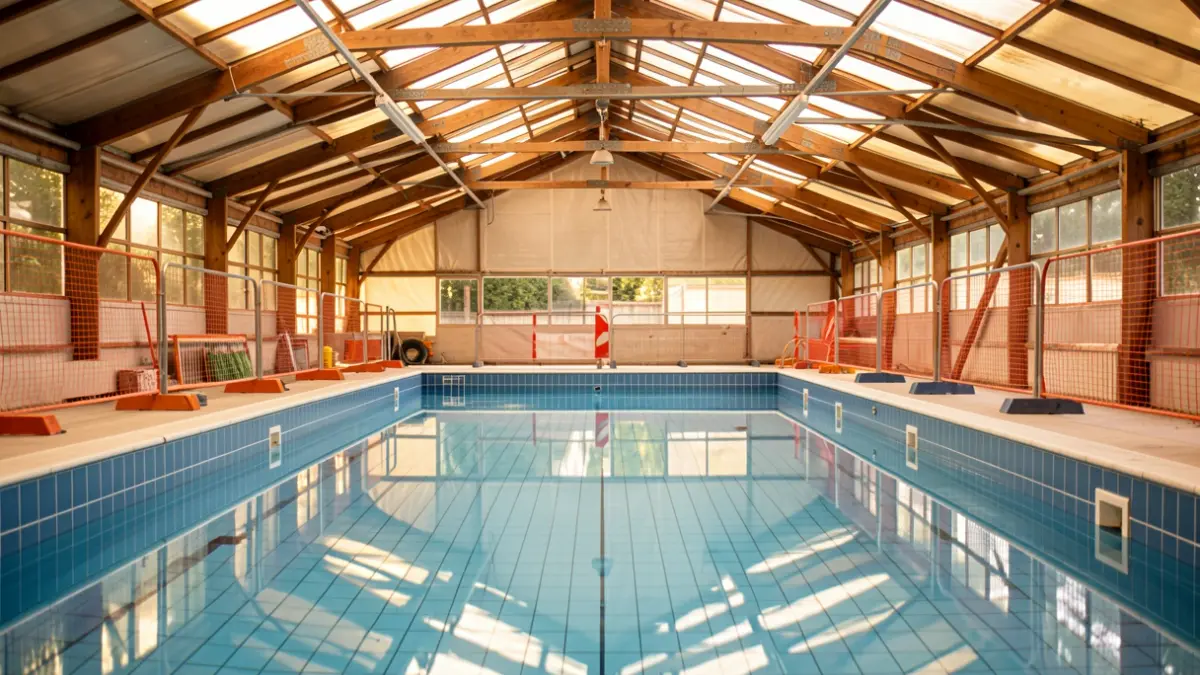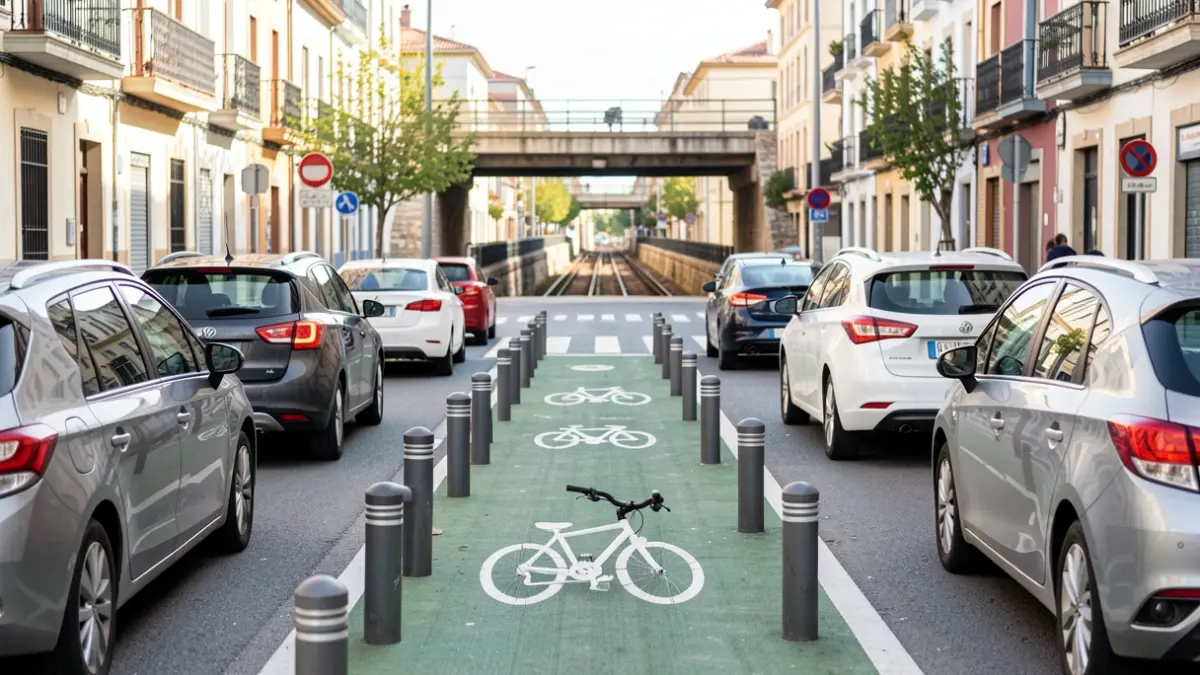
The new cycle lane in Cunit connects the C-31 road with the promenade, passing through sensitive areas such as a school, a nursery, and a sports pavilion. Thanks to an underpass beneath the train tracks, cyclists can directly access the town's beaches.
The design of the bike lane, which runs along an avenue between traffic lanes in both directions, has raised doubts among residents about its safety. However, councilor José Manuel Cabada explained that the design was developed in consultation with mobility experts, who concluded that a central layout with physical segregation is the safest for cyclists on roads with two-way traffic.
The separation between the bike lane and cars has been achieved using rubber bollards. According to the authorities, by respecting the 30 km/h speed limit established for the entire municipality, this design should ensure safety, especially in an area near a school and a nursery where maximum caution is required.
Experts argue that cyclist safety is maximized when cyclists travel in the same direction as motorized traffic, which is achieved with this layout. Furthermore, proposing a bike lane in each direction of traffic would have necessitated the removal of parking on both sides of the avenue, whereas with the current design, parking has only been removed on the side of the nursery and school, retaining that which serves the restaurants.
The construction of the bike lane has included the creation of a new roundabout near the train tracks. The objective is to improve cyclist safety by facilitating the entry of vehicles leaving parking spaces into traffic with a U-turn without crossing the bike lane.
The creation of this bike lane was in response to a resident demand expressed in participatory budgets. Councilor Cabada has defended the initiative, highlighting that the goal is to provide infrastructure for sustainable mobility, and has noted that both cyclists and scooter users consider the new lane to offer them greater safety.