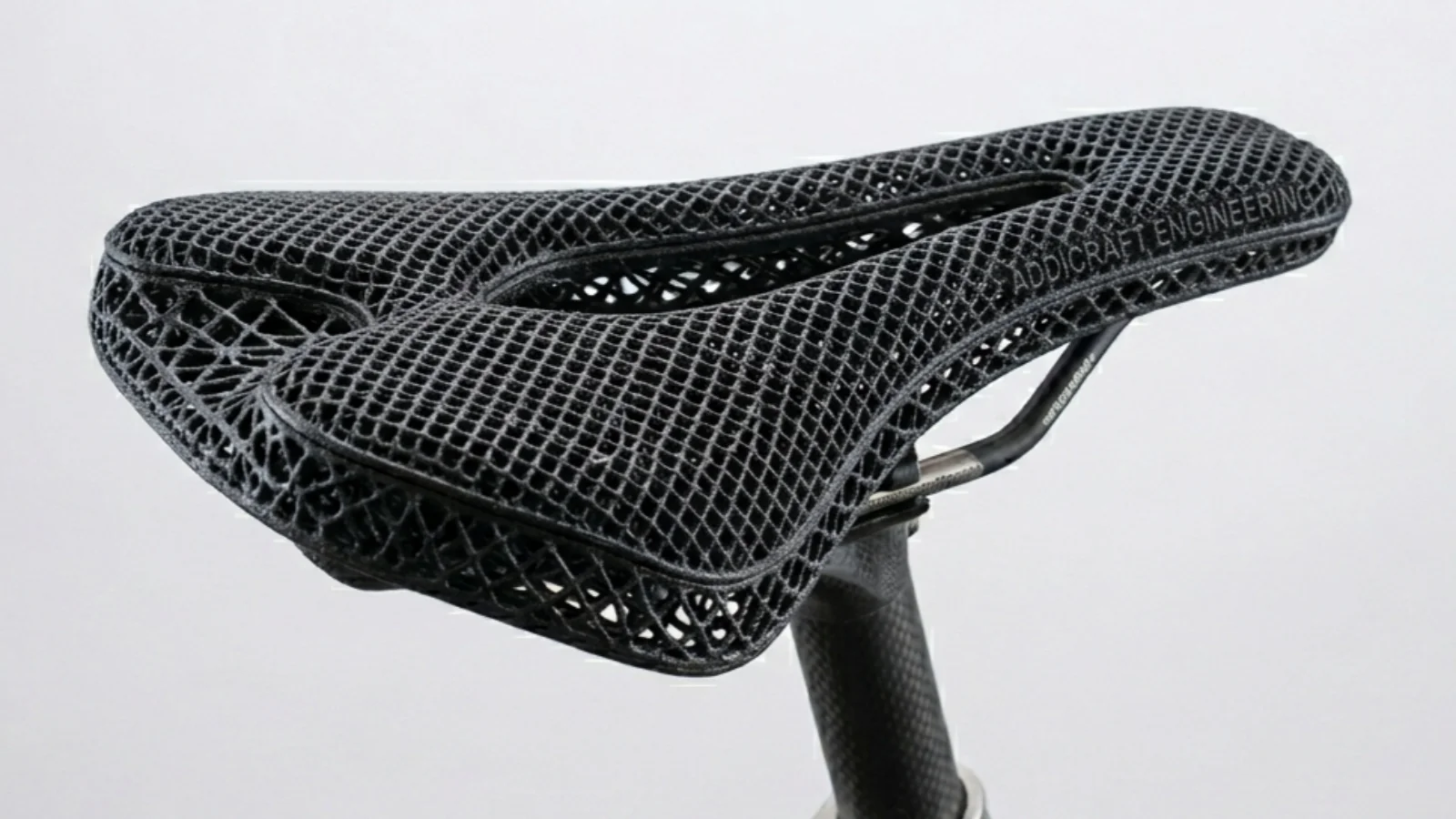
The creation of ADDICRAFT stems from a global challenge: the need to transition towards a more circular and decarbonized industry. Through topological optimization, a mathematical method that uses algorithms to remove excess material from a structure where it does not mechanically contribute, the company can redesign everything from aerospace components and machinery to everyday consumer goods. The result is much lighter, aesthetically advanced products with a drastically lower carbon footprint in their manufacturing.
"It's not just about manufacturing differently, but about conceiving the product in a completely new way from its origin," explain the founders. This transversal approach allows their technology to extend beyond a single sector, acting as an innovation driver applicable to any market seeking to optimize material consumption.
To ensure maximum technical rigor and remain at the forefront of R&D, ADDICRAFT has joined forces with the International Center for Numerical Methods in Engineering (CIMNE). This strategic collaboration combines the agility and market vision of the young company with the scientific robustness and computational simulation capabilities of one of the sector's leading research centers.
To bring this optimization to its full potential, the company relies heavily on additive manufacturing. As a production method where the final shape is not constrained by the limitations of conventional machinery, it becomes the ideal way to materialize these complex and efficient geometries with complete freedom.
"Additive manufacturing allows us to break molds," conclude the Falcones brothers. "It gives us the technical freedom to work with all types of materials, from conventional ones to advanced metamaterials, enabling these hyper-optimized designs to become real and competitive products."