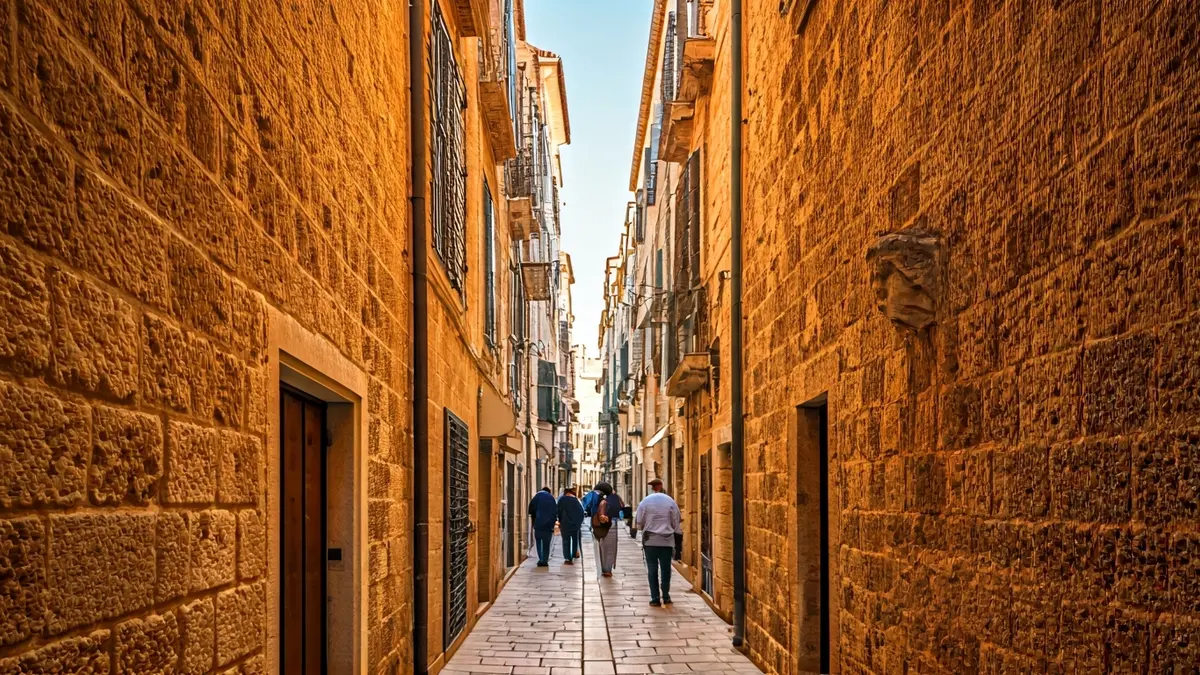
This street, not remarkable for its grandeur, owes its name to a 'carota' or carved face found on the lintel of a corner house with Mirallers Street. However, this official explanation is merely the tip of the iceberg of a much more complex and, for some, uncomfortable urban reality.
In 17th-century Barcelona, a port city with a strict Catholic morality and a significant military presence, most of the population was illiterate. In this context, images became an essential language. 'Carassas,' exaggerated faces often depicting pleasure or mockery, served as discreet signals for the presence of brothels. It was an effective urban code that allowed the city to reconcile its moral image with the reality of paid sex.
Wherever a carassa looked, there was a brothel. It was a discreet but effective code. In other Mediterranean ports, more explicit symbols were used; Barcelona, however, opted for these almost theatrical stone faces, suggesting without stating.
These carassas, sometimes accompanied by red-painted facades, functioned as a form of visual advertising in a time before the written word, creating a true cartography of desire. Carassa Street not only commemorates a specific carving but an entire symbolic system that today allows us to trace an underground economy that was a fundamental part of urban life.
Although many have disappeared or are reproductions, carassas can still be found in various parts of Ciutat Vella, especially in the Born and Gòtic districts. Over time, the meaning of the carassa evolved, eventually also designating festive figures that spat sweets at Christmas, offering a playful counterpoint to their original function.
Historians point out that the presence of brothels in modern Barcelona (16th-17th centuries) was structural. After the crisis of the medieval official brothel, prostitution dispersed and became clandestine within the walled city, at which point the carassas played a crucial role as indicators of these covert businesses.