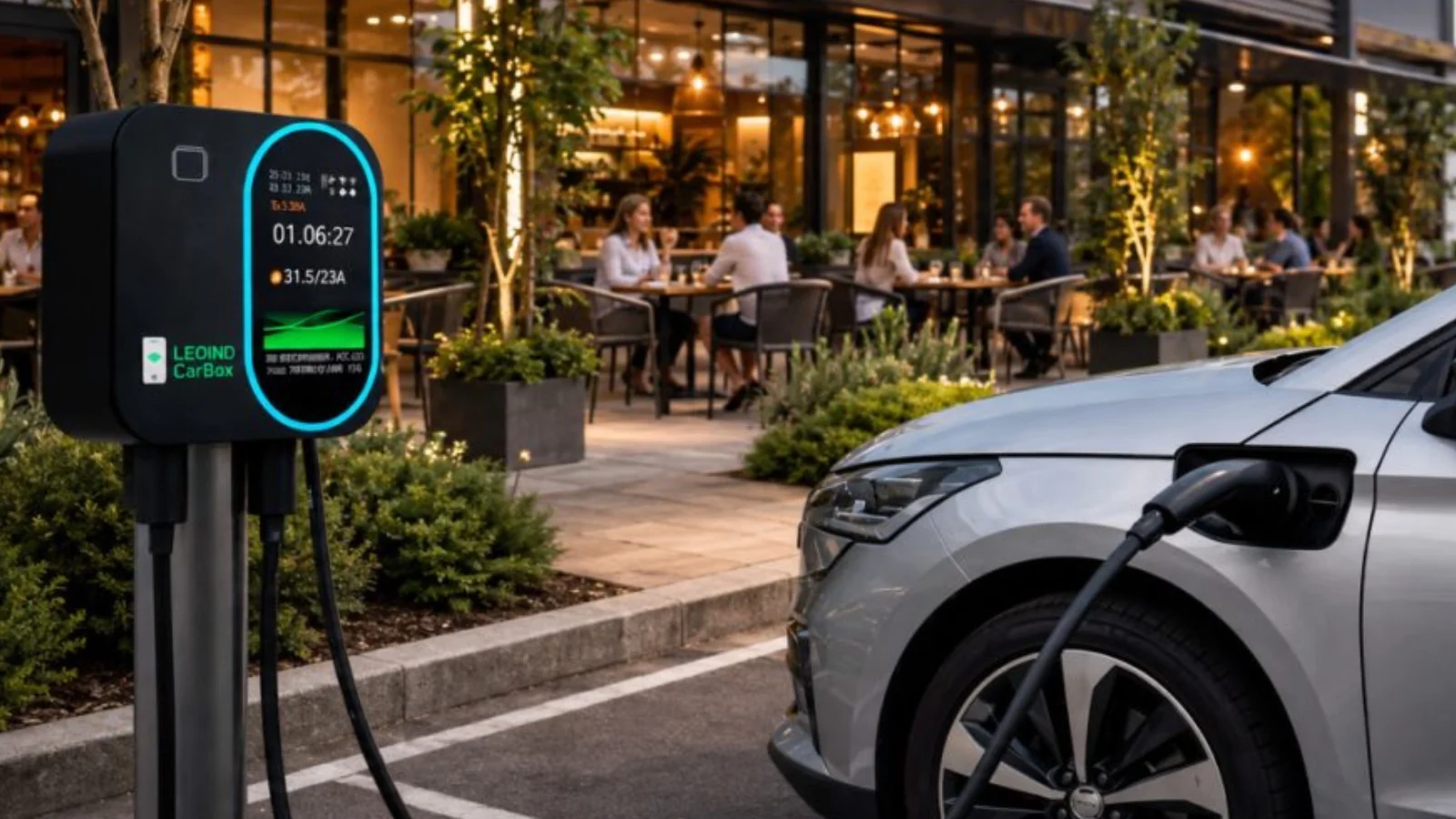
In a Hotel or Restaurant with its own parking, each space occupies an area that normally only provides convenience to the customer. Incorporating an electric vehicle charger allows transforming part of that space into a service capable of attracting new bookings, improving the experience, and generating income during meal times.
The advantage for an establishment in Catalonia is particularly clear: the driver needing to recharge is not just looking for an available spot. They also value finding a place to make good use of their waiting time. If they can eat peacefully while regaining range, the hotel or restaurant becomes part of their travel planning.
To achieve results, simply installing the equipment is not enough. You need to choose the right power, set a fair price, communicate the service, and organize the space's occupancy.
The charger can influence restaurant choice
When someone travels by electric car, the availability of charging can be a criterion for deciding where to stop. Two restaurants might offer a similar gastronomic proposal, but if one allows charging during the meal, it gains a practical advantage.
The benefit also extends to local customers who do not have a private charging point at home. For them, eating at an establishment or staying at a hotel with charging facilities can become a convenient way to meet two needs in a single trip.
It's not just about attracting a one-off visit. A simple experience —accessible parking, operational charger, and transparent pricing— can encourage repeat business and recommendations.
⚡ Meal times align with charging times
A typical restaurant visit allows the use of alternating current chargers without forcing the customer to wait exclusively by the vehicle. While they eat, the car remains parked and receives power.
The appropriate power will depend on the electrical installation, the average duration of stay, and the vehicle profile. A more powerful unit will not always produce a better result: many cars limit the AC power they can accept.
Before choosing, consider:
Available power at the premises.
Simultaneous consumption from kitchen, climate control, and other equipment.
Average duration of lunches and dinners.
Expected number of electric vehicles.
Possibility of future installation expansion.
Dynamic power management can distribute available energy and temporarily reduce the charge when the restaurant has high consumption. This protects the installation without needing to contract more power than necessary from the outset.
Monetizing the space without increasing the cost of the experience
The charger can generate direct income by charging for the supplied energy. However, the price should not be set solely to achieve the highest margin per session.
An excessively high rate can discourage customers. Conversely, a price that is too low might not cover energy costs, payment processing fees, maintenance, communications, and depreciation.
To understand the real return, consider two outcomes:
Direct profitability: amount charged for charging minus service-related costs.
Indirect profitability: bookings secured thanks to the charger, increased customer loyalty, and spending at the restaurant.
A charging point can be worthwhile even with a modest direct margin if it helps fill tables during off-peak days or hours.
💳 Easy payment increases usage
In a restaurant setting, the driver is often an occasional user. Forcing them to download an app, create an account, and request a card can turn a simple action into an unnecessarily lengthy process.
Chargers with payment systems offer more direct alternatives, such as QR code access. The customer scans the code, checks the price, enters their payment method, and starts the session from their phone.
RFID cards can also be used for employees, regular customers, or the business's own vehicles. A combination of pay-as-you-go access and authorized users provides more flexibility.
The process should be understandable without needing staff assistance:
Identify the charger and the parking spot.
Check the price before starting.
Initiate the session in a few steps.
Verify that the vehicle is charging.
Complete the transaction and check consumption.
While dining room staff can assist with issues, daily operation should not depend on an employee manually activating each charge.
Turning the charger into a reason to book
To attract customers, the service must be advertised before they arrive at the establishment. A charger that is only discovered upon entering the parking lot will have little capacity to generate new bookings.
The restaurant can indicate charging availability on its website, social media profiles, booking confirmations, and customer communications. It's also advisable to provide useful details: number of connectors, approximate power, payment method, and the possibility of reserving the spot.
A simple phrase like “We offer charging for customers during their meal” is more helpful than an excessive technical description. Users want to know if they can use the point, not study the equipment's electrical specifications.
📍 Signage within the parking area is also important. The spot must be easy to locate and remain free for vehicles that are actually going to charge.
Promotions linked to consumption
Restaurants can use charging as a commercial tool without offering it for free permanently.
Some options include:
Including a certain amount of energy with special menus.
Applying a discount on charging for restaurant customers.
Providing a promotional code during less busy periods.
Offering a credit on the charging session when a minimum consumption is exceeded.
Providing special conditions for regular customers.
These actions must be easy to explain and manage. If a promotion requires staff to perform manual calculations or causes confusion with each service, it will end up affecting operations.
The most practical approach is to define in advance what the offer includes, for how long it applies, and what the subsequent rate will be.
Preventing the spot from being blocked
One of the main risks is that the vehicle remains parked long after charging is complete or the meal is finished. This reduces availability and limits potential revenue.
Charger reservations can be linked to table bookings, asking customers to indicate if they will arrive with an electric car. This avoids promising the service to multiple drivers simultaneously.
As demand increases, an estimated usage time or a clearly communicated occupancy fee can be implemented. The goal should not be to penalize, but to encourage rotation and prevent the charger from becoming a permanent parking space.
In establishments with multiple shifts, organization can adapt to lunch and dinner schedules. Session data will help determine if another connector is needed.
📊 Measure to know if it's really working
The management system provides data on the number of charges, energy supplied, session duration, and revenue generated. However, to assess the commercial impact, it's important to relate this data to the restaurant's overall activity.
The establishment can easily track:
How many reservations request the charger.
How many users are new customers.
Their average spending at the restaurant.
On which days and times it is used most.
How often it is unavailable due to being occupied.
How many customers return.
This information can be used to adjust rates and promotions. It also helps decide whether to add another point or change the available power.
An investment that must be planned based on actual usage
The most visible location is not always the best from an electrical standpoint, while the most economical installation solution might be inconvenient for the customer. Therefore, the parking entrance, cable routing, vehicle maneuverability, and proximity to the electrical panel must be studied together.
It's also important to consider the necessary connectivity for managing payments and monitoring the equipment. Insufficient coverage can lead to communication failures, sessions that don't start, or difficulties in checking the charger's status.
Thinking about these aspects from the beginning avoids later modifications and allows charging to be seamlessly integrated into the restaurant's daily operations.
From parking space to customer service
An electric charger can transform the parking lot of a Sitges restaurant into more than just a parking area. When managed well, it helps attract drivers who need to recharge, provides a differentiating element, and generates income during a time when the vehicle would already be parked.
Profitability depends on the sum of several factors: adequate power, ease of payment, transparent pricing, good signage, and data monitoring. When these elements come together, the charger integrates naturally into the restaurant's service.
At LEDIND CarBox, we offer electric car chargers with payment systems, adaptable to the needs of restaurants and other businesses. Each installation can be planned considering available electrical consumption, parking turnover, and the desired customer experience.
LEDIND CarBox
Phone Spain: +34 93 266 54 58
Phone Andorra: +376 685 100