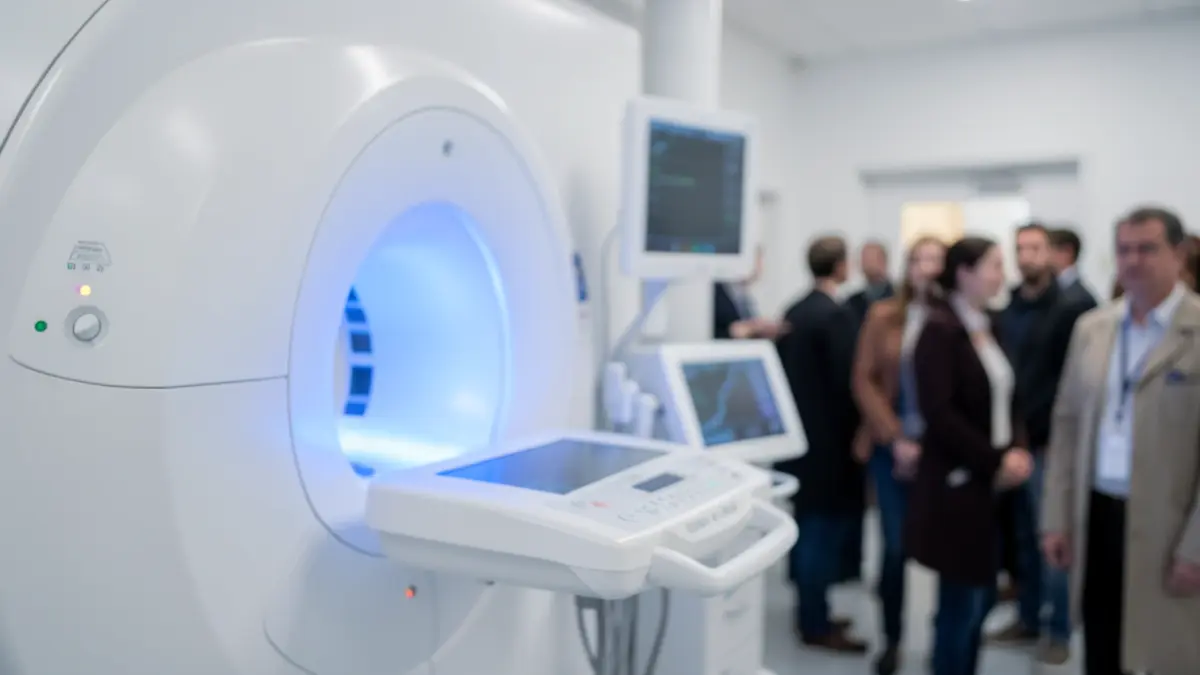
The team from the Radiation Oncology Service at the Clínic Barcelona Comprehensive Cancer Centre has performed this pioneering single-session treatment on an elderly patient with a primary kidney tumor. Surgery, the standard treatment for localized kidney cancer, presented a high risk for this patient, who already suffered from chronic kidney failure. The new technique allows for kidney function preservation and offers a less invasive alternative to thermal ablation techniques, which are only effective for small, peripheral tumors.
SBRT, which delivers very high doses of radiation in a few sessions (one to five), has proven effective for kidney tumors under 4 centimeters in a single session, and up to 10 centimeters in three sessions. This non-invasive, outpatient treatment has shown excellent oncological results, good tolerance, and good kidney function preservation, according to recent studies.
The implementation of this technique follows the positive results of the international Phase II clinical trial FASTRACK II, presented in May 2026. The study showed 100% local disease control up to seven years post-treatment and nearly 80% of patients free from metastasis. SBRT has already been incorporated into European urology clinical guidelines.
The first patient treated in Granollers had a 2.5-centimeter tumor in the central part of the kidney. Surgery would have involved the complete removal of the kidney, with a risk of dialysis. SBRT, with a single dose of 26 Gy, has made it possible to offer a curative treatment without the risks associated with surgery or ablation techniques.
The possibility of performing the treatment in a single hospital visit represents a significant advantage for elderly and polymedicated patients. Dr. Meritxell Mollà, head of the Radiation Oncology Service, emphasizes that the technique does not require hospitalization or anesthesia, and that the service's decade of experience and high patient volume ensure treatment precision.
The Granollers facility, part of the C-17 Network, allows patients in the area to access this technique without needing to travel to Barcelona, promoting health equity. All cases are evaluated in the multidisciplinary uro-oncology committee, which integrates various disciplines to offer the best therapeutic option for each patient.