The research, published in the journal PNAS and led by Francesc Xavier Gomis-Rüth and Ulrich Eckhard, opens the door to developing therapies for diseases caused by defective antibodies, such as IgA nephropathy or vasculitis.
Immunoglobulin A (IgA) is a crucial defensive barrier in mucous membranes. While many pathogenic bacteria cleave IgA1, IgA2, found in the colon, resists these defenses. Thomasclavelia ramosa is a known exception for breaking down both subclasses, but the mechanism against IgA2 remained unknown.
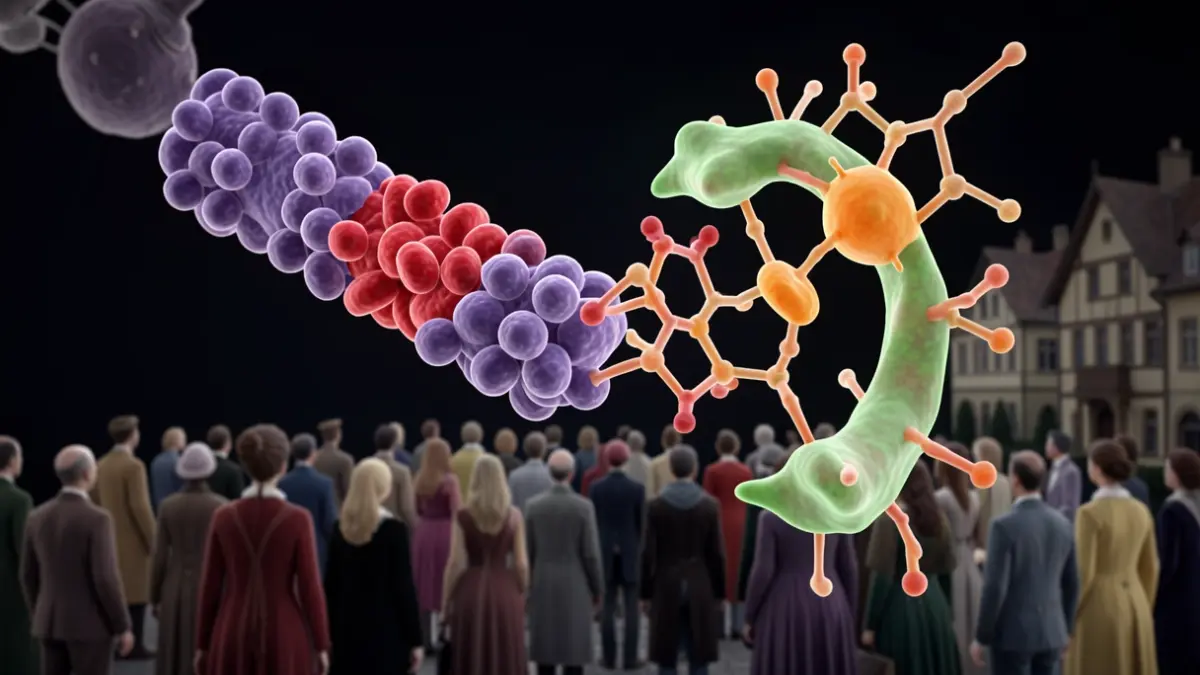
Using cryo-electron microscopy at IBMB-CSIC and the ALBA Synchrotron, as well as the European synchrotron ESRF in Grenoble, the team observed the interaction between a bacterial enzyme and IgA2. They described how the enzyme binds to the antibody, using a knob-like loop structure that fits into an enzyme cavity, causing a rotation that opens a 'gate' for cleavage.
This mechanism allows T. ramosa's enzyme to grip the antibody via a loop common to IgA1 and IgA2, and cut at the beginning of its 'hinge' region, rendering it ineffective. This explains its ability to break down both antibody types.
This finding will enable the design of specific peptidase engineering to eliminate defective IgA antibodies causing diseases like IgA nephropathy or vasculitis. It could also help protect intestinal IgA in inflammatory diseases.