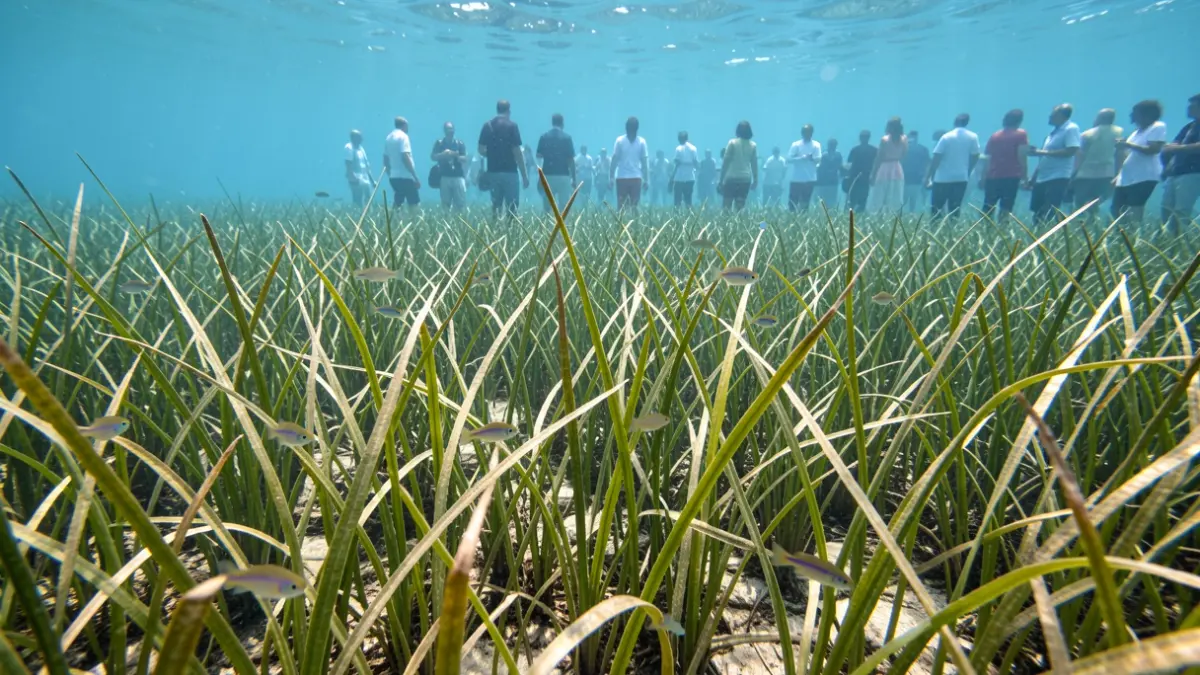
The GENBIOCYM project (Genetic and Microbial Foundations for Functional Restoration of Cymodocea nodosa Meadows), coordinated from the Botanical Institute of Barcelona (IBB, CSIC-CMCNB), has been selected to receive funding in the European Biodiversa+ BiodivConnect call. This initiative aims to study how genetic diversity, population connectivity, and the microbiome can contribute to improving the restoration of Cymodocea nodosa seagrass meadows, a marine plant that forms ecologically valuable habitats.
To achieve these goals, GENBIOCYM will bring together research teams from Spain, Portugal, and France. The researchers will work collaboratively in different regions of the Mediterranean Sea and the Atlantic Ocean to better understand the biological factors that promote the recovery and persistence of these seagrass meadows.
The BiodivConnect call, promoted by Biodiversa+, the European partnership for biodiversity, focused its 2025-2026 edition on the restoration of ecosystem functioning, integrity, and connectivity. It received 278 pre-proposals, of which only 36 were selected for funding, including GENBIOCYM.
The chosen initiatives address challenges such as the restoration of seagrass meadows, rivers, wetlands, agricultural soils, or kelp forests, with the ultimate goal of enhancing ecosystem recovery and resilience globally.