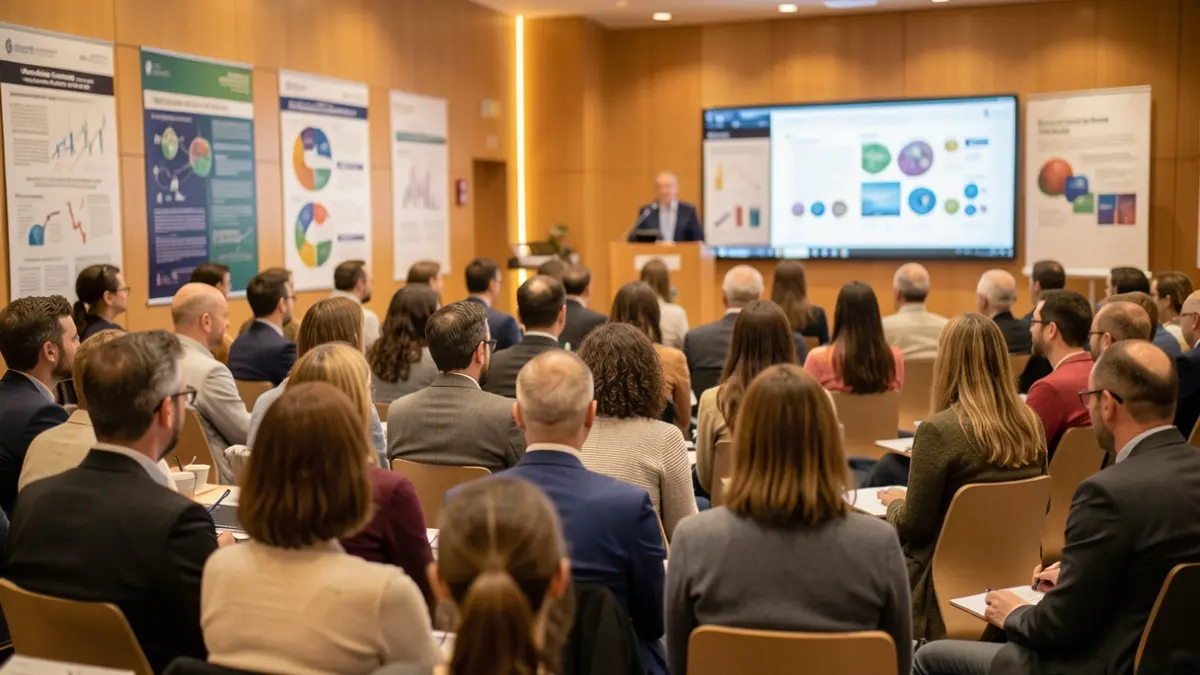
The conference focused on clear criteria evaluation and supporting professional changes in research careers. The event, held at the Faculty of Medicine and Health Sciences, included participants from the Generalitat de Catalunya and national and international research institutions.
Teresa Sanchis, Director General of Research for the Generalitat de Catalunya, and Quique Bassat, CEO and Chief Scientist of ISGlobal, opened the conference, highlighting the importance of human talent. Bassat emphasized that "it is the people, researchers, technicians, managers, and support teams, who ultimately turn these resources into knowledge, evidence, and social impact".
Marta Agostinho from EU-LIFE described non-linear careers and proposed viewing talent development as an evolving relationship, "incubating talent" to allow for growth and directional changes, recognizing the value of mentorship and collaboration.
In terms of attraction, Michele Rosa-Clot from the European Commission presented the European Charter for Researchers as a framework for transforming principles into concrete measures. A panel discussion moderated by Cristina Borràs (AGAUR) brought together funding bodies and research centers to debate talent attraction and support.
For selection, Alexander Rushforth from Leiden University introduced Reformscape, a tool from DORA, to translate evaluation reform into hiring and promotion decisions. A panel moderated by Eva Casamitjana (ISGlobal) addressed fair selection practices.
Finally, Vanessa Saint-Gelais encouraged reflection on personal interests to guide the next professional step. A session moderated by María José Merino (ISGlobal) focused on training, mobility, and collaboration opportunities.
The conference connected personnel policies with scientific quality, sharing the common idea that supporting research careers also means creating conditions for individuals to evolve, take on new responsibilities, or explore different professional fields.