A multidisciplinary team comprising researchers from the Computer Vision Centre (CVC), the Autonomous University of Barcelona (UAB), the Bellvitge Biomedical Research Institute (IDIBELL), the Bellvitge University Hospital (HUB), the University of Barcelona (UB) and ICREA has published a study in the journal Human Brain Mapping describing a new personalised neurosurgery protocol. The aim is to identify and preserve complex cognitive functions, such as computer code comprehension, which standard language tests may overlook.
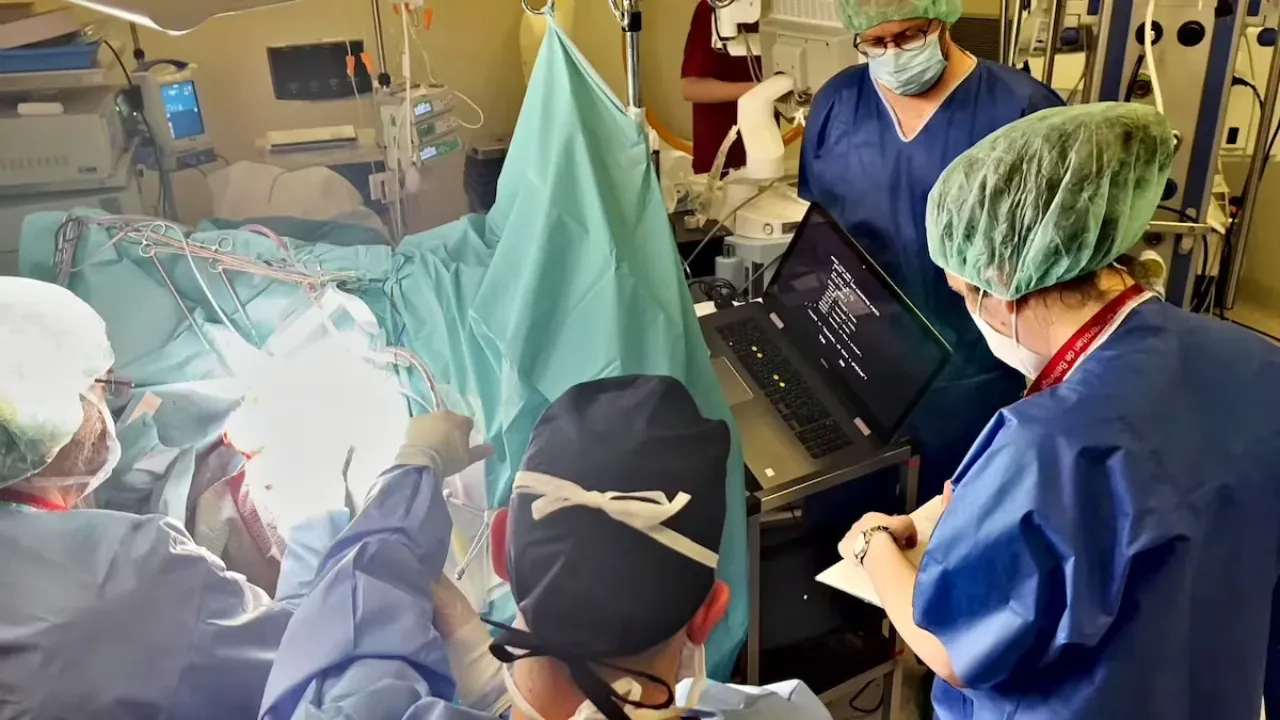
The study is based on the case of a 41-year-old software engineer who underwent surgery for a grade 2 astrocytoma located in the left frontal lobe. During the intervention, performed with the patient awake, the neurosurgery team stimulated his brain while he solved 126 computer code exercises. This test allowed the identification of two key areas for code comprehension that the standard language test had not detected.
“"For this patient, programming was not just a job: it was an essential part of his life. The language test we usually perform did not detect any critical area in this region, but the personalised protocol showed us two points we had to respect."
The result was the complete removal of the tumour, with preservation of performance in code comprehension tests and linguistic functions. Three months after the intervention, the patient was able to resume his professional activity without any loss of ability. The study demonstrates that personalised tests can provide complementary information to standard assessments, influencing surgical decisions to preserve skills essential for personal and professional autonomy.