The number of convoys transporting raw materials or finished products from countries such as Germany, France, or Poland has drastically decreased following the fatal accident in Gelida on January 20 and the closure of the Rubí tunnel (Barcelona).
According to sources from LPF Perthus, the company managing the section between Perpignan (France) and Figueres (Girona), only one to two daily trains are currently running, instead of the usual ten. Since January 21, only 33 out of 155 scheduled freight trains have passed, severely impacting the capacity of the La Llagosta terminal.
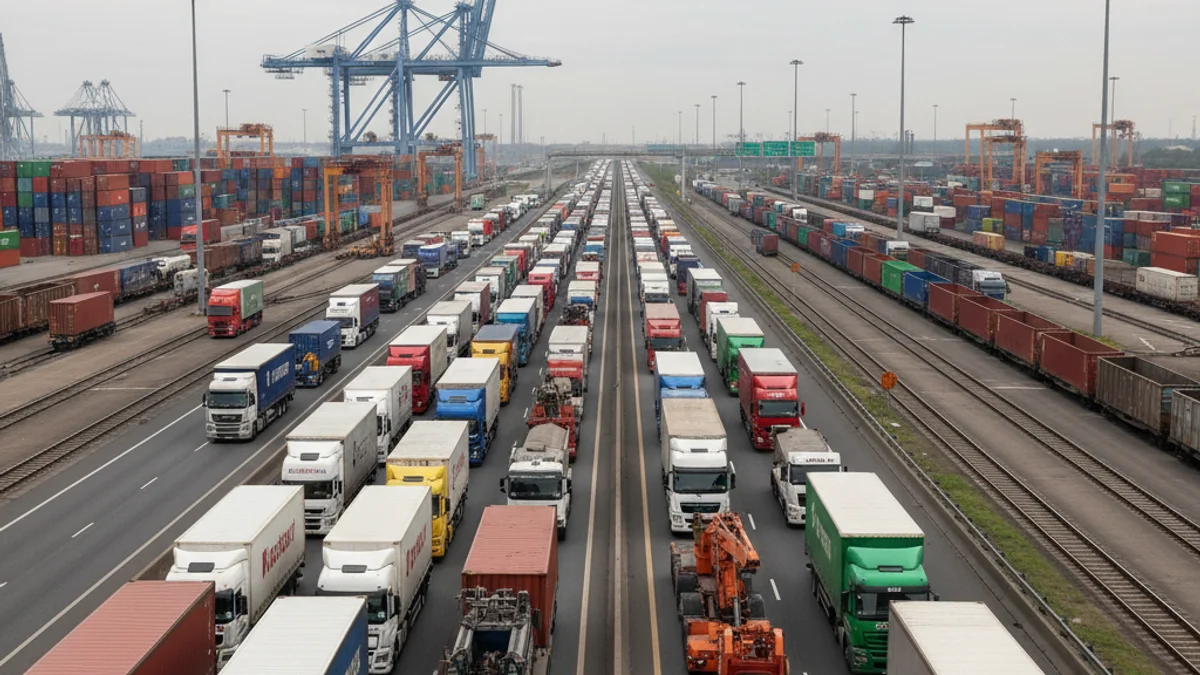
The natural alternative, the truck, is collapsed. The flow of heavy vehicles has shifted to the N-II and local roads that are not dimensioned to absorb such traffic density.
The small and medium-sized enterprise employers' association, Pimec, estimates that the cost of this mobility crisis, including supply chain interruptions and disruptions on the AP-7, amounts to approximately nine million euros daily for the Catalan economy. This situation also affects regions like Aragón, Navarra, and Southern France, which rely on the Port of Barcelona.
“"The situation last week was extraordinarily complicated, and now we are beginning to see a certain horizon. We must be cautious, but we hope that over the next few days, restricted freight traffic can be restored."
The President of the Port of Barcelona, José Alberto Carbonell, explained that Adif expects to reopen traffic to the north (France) on Friday, while the recovery of southbound traffic, affected by the Gelida accident, will be gradual until Monday. Before the crisis, the port managed an average of 4,000 containers weekly by rail.