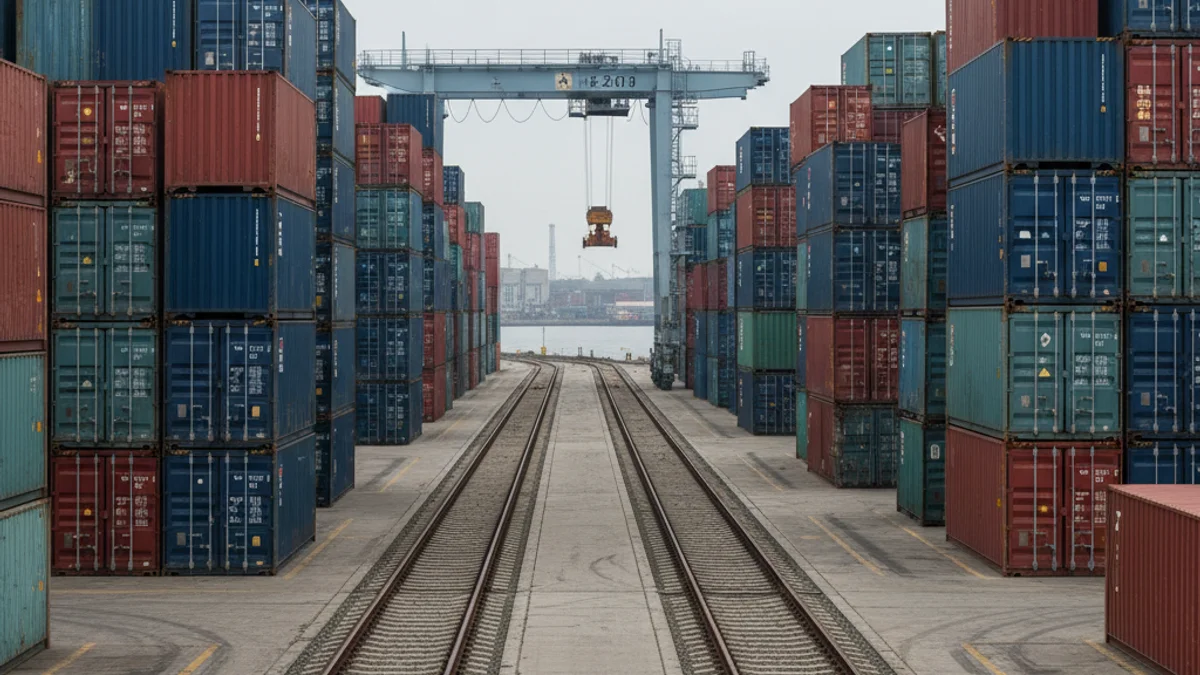
The Inovyn plant in Martorell, which employs 300 people, had to stop operations because one of its essential raw materials arrives by rail directly from the Port of Barcelona. Company sources explain that normally they receive one daily train loaded with dichloromethane, but only one train has arrived in the last ten days.
“"If it lasts much longer, it will be a serious problem."
The collapse affects 18% of the goods distributed by train from the Port of Barcelona. The blockage persists for international gauge trains due to the cut in the Rubí tunnel, while Iberian gauge trains heading south only operate at night and sporadically. The Port Authority admits that the temporary solution is insufficient to handle the entire volume of traffic.
The impact extends to commerce and tourism in Barcelona. Javier Cottet, vice president of Barcelona Oberta, estimates sales drops between 10% and 40% over the last week, especially during the weekend. Regarding tourism, Manel Casals, director of the Barcelona Hotel Guild, points out that the main impact is on the mobility of the 54,000 sector workers who reside outside the city.
Despite the disruptions, major Catalan industry shows resilience. Companies like Seat in Martorell, Ficosa in Viladecavalls, or Montesa Honda in Santa Perpètua de la Mogoda continue to operate normally, as they rely mostly on road transport. However, employers' associations like UPM and unions like CC.OO. and UGT-Fica are monitoring the loss of working hours due to constant Rodalies delays.