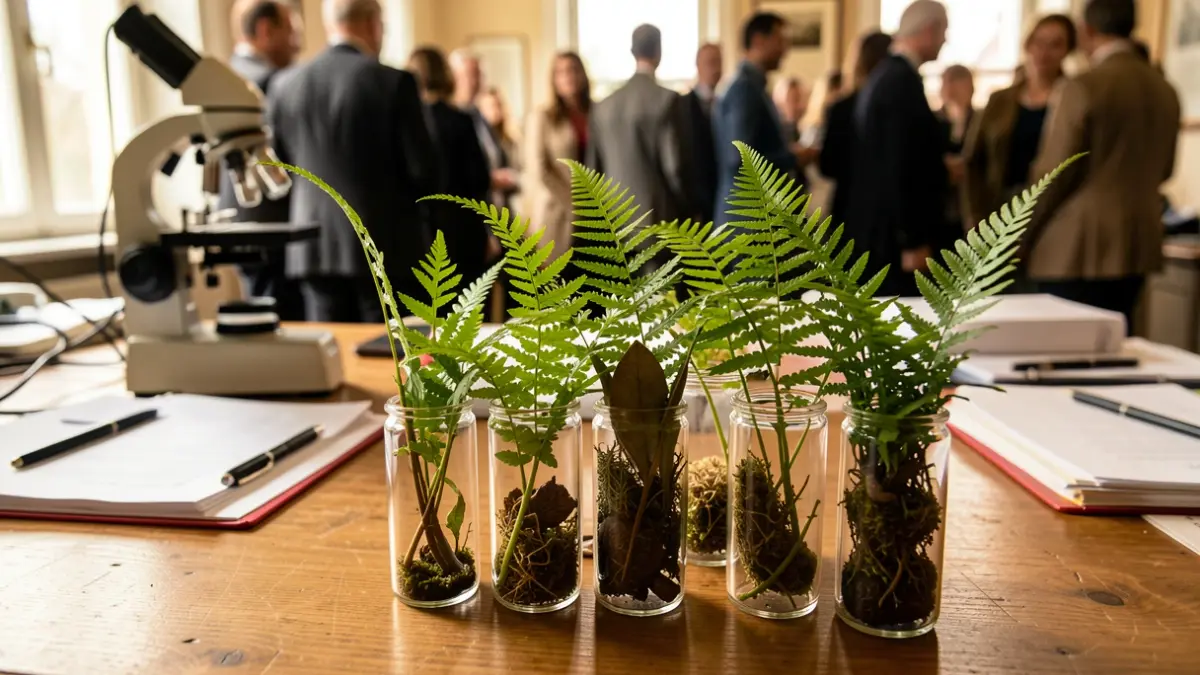
During May, the IBB team conducted fern collection campaigns in Cap de Creus, followed by further collections in the Vall d’Aran in July. These activities are part of the FERNTASTIC project, which studies the evolutionary dynamics of fern genomes, and also contribute to the cross-border project PHYLOFLORA, aimed at creating a reference digital flora for the Pyrenees.
As part of the Catalan Initiative for the Earth BioGenome Project (CBP), field trips have been undertaken to catalogue the biodiversity of Catalan-speaking territories. Among the collected species is Rhaponticum centauroides, found in the Vall d’Aran.
Biodiversity has also been explored in orchards and fields through the AGROBIOPYR project, which seeks to recover and valorize traditional agricultural varieties and breeds from the Pyrenees. Ethnobotanical interviews have been conducted in Ribagorça to document local knowledge, and the team participated in a project meeting in the Vall d’Aran.
Regarding pastoralism and the cultural biodiversity of the Països Catalans, interviews have been carried out with shepherds to document their knowledge of the impact of flocks on flora and landscape. On September 5th, Marina Vilalta, the oldest active shepherdess in Catalonia, was interviewed; she passed away a few days later, on September 14th. Her testimony is considered an exceptional contribution to preserving the memory of traditional pastoral life.
Finally, as part of activities organized by the Camprodon Town Council, Teresa Garnatje, Montse Rigat, and Joan Vallès gave a lecture titled «Plants and their uses: ethnobotanical studies in the upper Ter Valley».