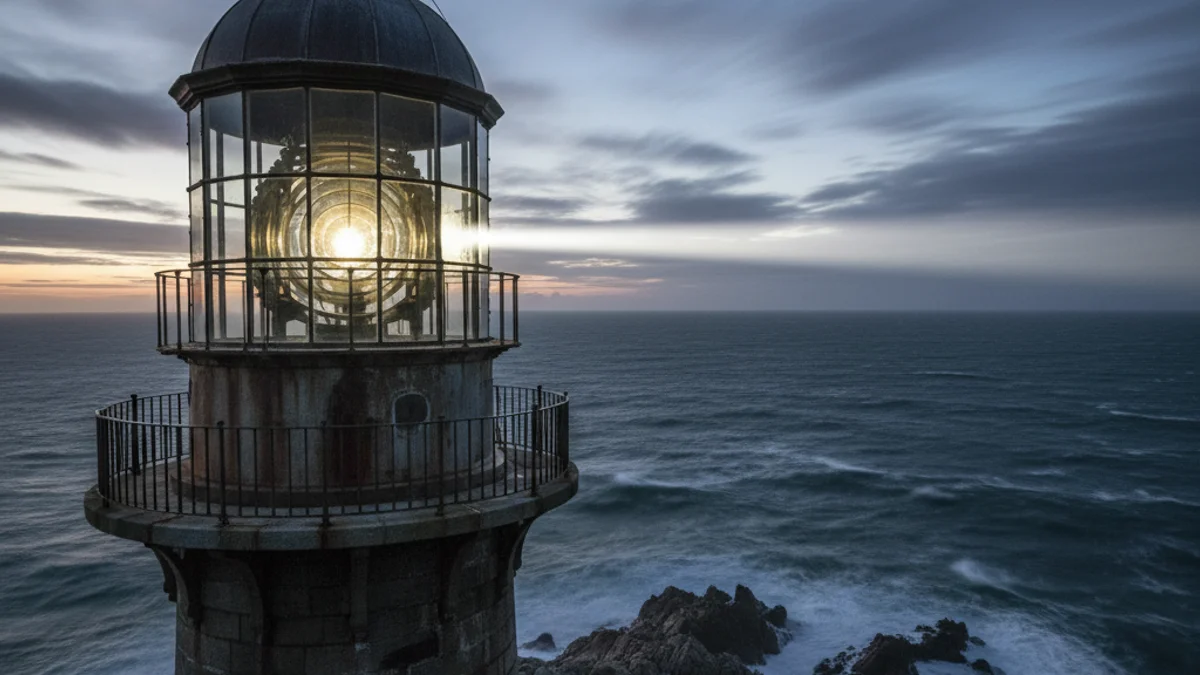
The Llobregat Lighthouse, erected in 1852 on an old defensive bastion, is the city's oldest signaling tower, standing 32 meters high. For 174 years, this lighthouse has served as a reference point from the mouth of the Llobregat River, highlighting the strategic importance of these facilities for navigation.
The identity of each lighthouse lies in its light, known as its 'DNA,' which is distinguished by frequency, occlusion, and color. This characteristic is vital for navigators, who use nautical charts to identify not only the distance to the coast but the exact point where they are located.
The color of the light also defines the type of signal: lighthouses emit white light for general coastal location; beacons (balises) use white, green, or red light for approaching ports or channels; and buoys (boies), which are floating, use various colors to warn of obstacles at specific points.
Regarding specific characteristics, the Llobregat Lighthouse emits one white light flash every five seconds, with a range of 23 nautical miles offshore (just over 40 km). Meanwhile, the Montjuïc Lighthouse has the longest range in the area, projecting two white flashes every 15 seconds up to 26 miles.