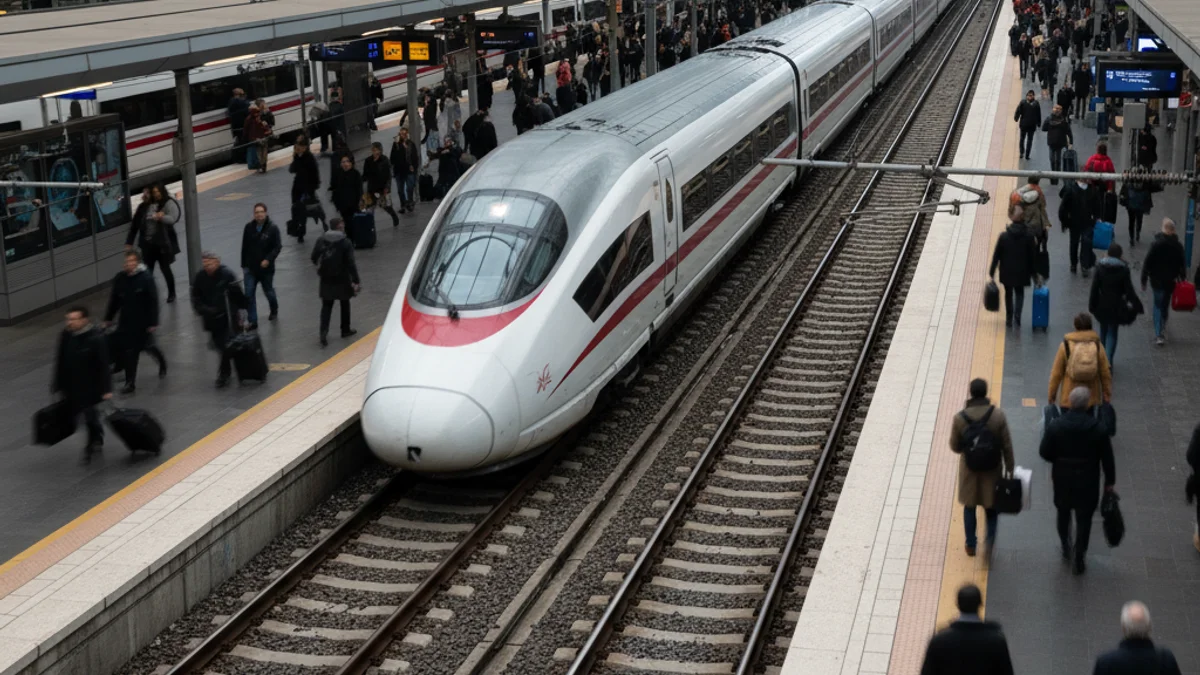
During the Three Kings holiday bridge, spanning from January 2 to 7, a total of 6,590 trains from the three operators circulated across the country's railway network. These movements are part of the overall balance for the Christmas, New Year, and Three Kings period, during which 22,160 trains ran (from December 19 to January 7).
The return operation was particularly concentrated on January 6 and 7, with 2,230 trains scheduled. January 7 was one of the busiest days of the entire festive period, recording 1,221 services, while approximately 1,000 services were counted on January 6.
Major stations served as the nerve centers for traffic. Madrid Porta de Atocha Almudena Grandes registered the arrival and departure of 1,353 trains during the Three Kings bridge (4,590 throughout Christmas). For its part, Barcelona Sants station managed 755 trains during the same period, totaling 2,613 throughout the holidays.
Other key stations like Chamartín Clara Campoamor registered 860 trains during the bridge, and Sevilla Santa Justa, 540. Furthermore, Adif highlighted the arrival of the Three Kings by train in cities such as Badajoz, León, Ourense, Vitoria, or Lleida on January 5.