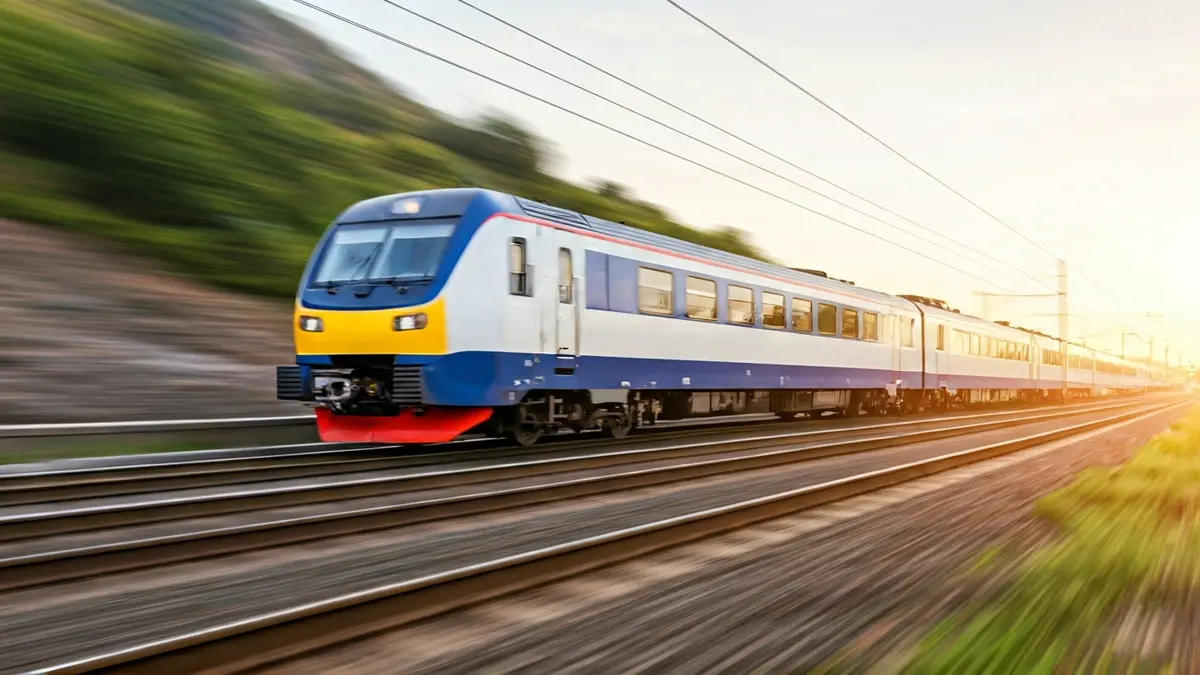
This conclusion stems from a comparison of official timetables from May 2000 and November 2025, prior to the Gelida accident and subsequent speed restrictions. The study indicates that, in many cases, trains made fewer stops a quarter of a century ago, contributing to faster travel times.
Lines in Camp de Tarragona and Terres de l'Ebre also show significant slowdowns. For example, a journey from l'Aldea-Amposta or Tortosa to Barcelona Sants in November 2025 was between 15 and 16 minutes longer than in May 2000. Similarly, the journey between Reus and Barcelona on the R14 has increased by ten minutes.
The R4 line shows the most notable differences, especially in the section crossing Penedès and Baix Llobregat. From el Vendrell, the minimum travel time has increased from 69 to 90 minutes. The Associació per a la Promoció del Transport Públic (PTP) attributes part of this slowness to the undergrounding works of the tracks in Sant Feliu de Llobregat, which have created a single-track section, and to the Mediterranean corridor works.
“"There is an increase in trains stopping at all stops and in frequencies, but what has not increased is the capacity of the network."
Adrià Ramírez, president of the PTP, points out that the increase in trains and frequencies without an expansion of network capacity forces faster services to yield space, lengthening travel times or even leading to their disappearance. For his part, Joan Carles Salmerón, director of the Centre d'Estudis del Transport, attributes the lack of investment in infrastructure as the main cause of the "weakness of the railway system".
Both experts agree on the need to reintroduce semi-direct trains and expand network capacity with new passing tracks. Ramírez proposes quadrupling tracks in sections such as Castelldefels to el Prat, and tripling the track between Montcada i Reixac and Mollet. Salmerón warns that Catalonia's demographic growth, which could reach 10 million residents, will make the creation of new lines and stations essential.