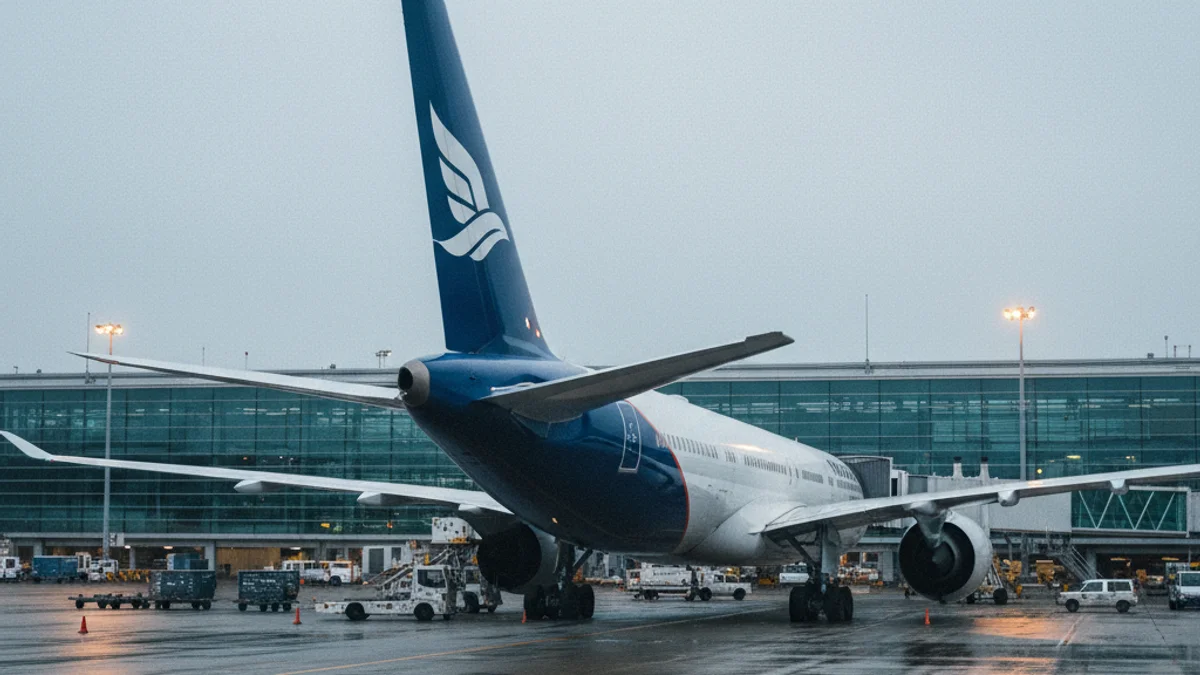
Carolina Martinoli, President and CEO of Vueling, has reaffirmed the airline's commitment to Barcelona as its priority market within the Route 2035 strategy. The goal is not a position in a global European ranking, but rather to continue leading in the Catalan capital and connecting the Spanish domestic market with the rest of Europe.
“"Barcelona is our home, and we want an airport that lives up to its ambition"
The company will begin its fleet transition with the incorporation of the first Boeing aircraft during the last quarter, a process that will be completed in six years. This renewal, with planes assigned by the IAG group (50 initial with 100 options), seeks to reduce emissions by 20% and improve punctuality. Furthermore, the new models will increase capacity, moving from the current 180-186 seats to configurations of 197 and up to 224 seats.
Vueling holds a 40% market share at El Prat airport and fully supports its expansion. Martinoli highlighted the crucial role of short-haul flights in feeding long-haul routes, acting as an amplifier for carriers such as Level, American Airlines, Qatar Airways, or British Airways.
There is a myth that long-haul can be developed by displacing short-haul to other airports, but the reality is that long-haul does not exist without the feeding from short-haul.