This investment is distributed with 3,058 acquisitions in 2024, the largest batch of the three-year period, followed by 2,954 in 2023 and 2,601 in 2025. Despite these figures, the provision of seating in public spaces generates debate among residents and urban planning experts.
Vertical and sloping streets do not have benches.
From neighborhoods like Sagrada Família, residents complain about the lack of benches in sloped areas, while in Can Baró, with narrow sidewalks, installation is complicated. Other associations, such as those in Diagonal Mar or Maresme, report no issues with quantity, but rather with maintenance or cleanliness.
The Federation of Neighborhood Associations of Barcelona (FAVB), through its vice-president Ana Menéndez, points out the lack of benches in areas with a high concentration of terraces, such as Blai Street or Plaça Reial, and in many small squares in Ciutat Vella. The Gràcia district has the lowest number of seats, a situation that Àngel Urraca, a resident with reduced mobility, considers 'totally insufficient'.
“"It is a very defensive or preventive urbanism, which seeks to prevent people from littering, from staying overnight, and ends up expelling not only the groups that are supposedly undesirable, but also the elderly, for example."
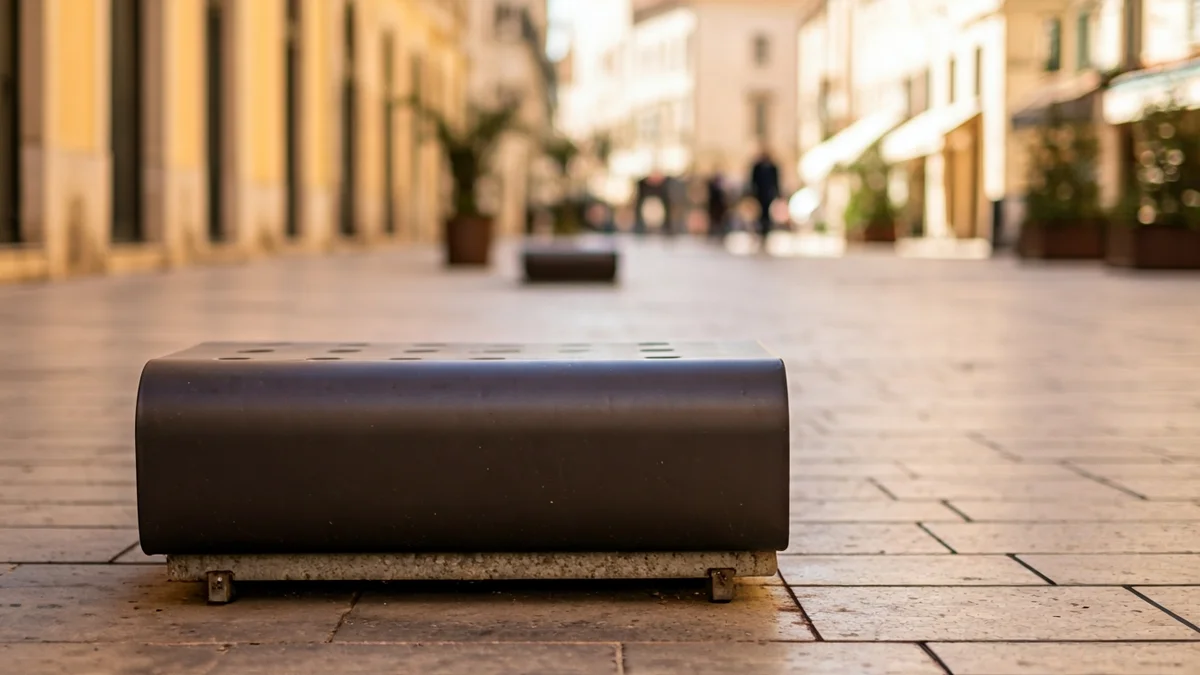
The design of the furniture is also subject to criticism. The Arrels Foundation identifies individual chairs as examples of hostile architecture, which particularly affect homeless people. Mirela Fiori, from the Universitat Oberta de Catalunya, describes the replacement of benches with fixed chairs as a 'very hostile policy'. Conversely, Anna Maria Puig, a researcher at the Universitat de Vic, argues that individual seats fulfill the function of rest if they are close enough to encourage social interaction.
The removal of seating, such as that which occurred in the Sant Antoni superblock, also generates controversy. Màrius Navazo, a public space specialist from the Gea21 study group, argues that the removal of benches should not be based on mere discomfort, but on more serious problems, and that the city needs benches to prevent streets from being inhospitable. Fiori adds that 'removing benches is not the solution, placing isolated fixed chairs is not either, and cold concrete benches without backrests end up driving everyone away'.