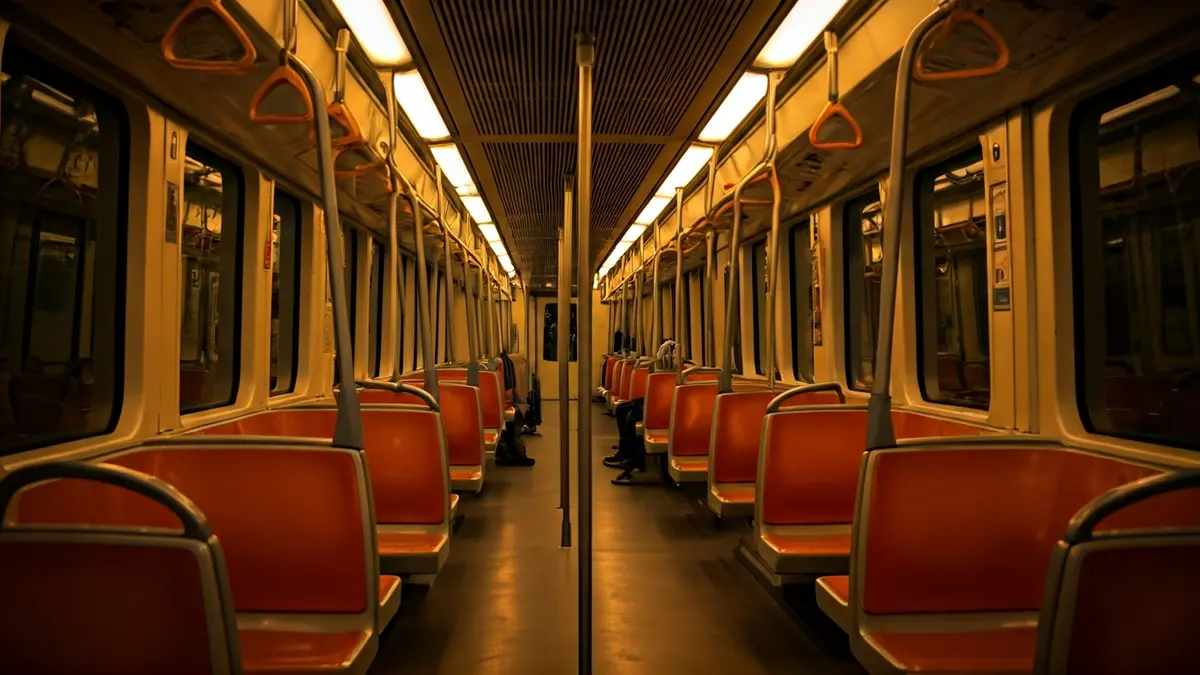
As of this Tuesday, Barcelona's Metro Line 1, known as the red line, has added a new train to try and ease passenger saturation during peak hours. This measure, implemented due to the increase in users since the Rodalies crisis at the end of January, has managed to reduce platform waiting times by five seconds. However, the current frequency, which stands at three minutes between trains, fails to improve upon the figures from four years ago, when the volume of passengers was considerably lower.
L1 is the busiest line in the metro network, with 126.3 million users in the last year. Added to this high number is the transfer of passengers from Rodalies lines R3 and R4, who now use the metro for their final commutes within Barcelona. Stations like Fabra i Puig experience large crowds during peak hours, often forcing users to let trains pass to find space.
Transports Metropolitans de Barcelona (TMB) has confirmed that, with the addition of this train, the waiting time during peak hours (from 7:00 to 9:30 AM) has been reduced to three minutes. Despite this specific improvement, the overall performance of the line has not recovered to 2022 levels, when the train frequency was 2.52 minutes, eight seconds less than the current one. This decrease in frequency occurred in 2024, when the line reduced the number of circulating trains from 36 to 34, coinciding with a historic increase in users, from 116 to 125 million.
The commercial speed of L1 has also decreased, from 26.50 km/h in 2022 to 25.30 km/h last year. TMB attributes this trend to two main factors. Firstly, the increase in passengers requires more time for boarding and alighting, which slows down the service. Secondly, although fewer trains are circulating than in 2022, the renewal of the fleet with 8000 series trains, which have a capacity of 1,400 people (compared to 950 for the older 4000 series), allows for more available seats. Currently, the 35 trains during peak hours offer 49,000 seats, exceeding the 33,250 available in 2022.
Regarding Line 5, it has been the only one to improve its commercial speed in the last three years, going from 25.50 km/h to 26 km/h. In 2023, it added a train, reaching 37 during peak hours, and improved its frequency by four seconds. The incorporation of a new train by TMB will allow it to be reduced by five more seconds, down to 2.24 minutes. This improvement has been possible thanks to track renovation works between Cornellà and Collblanc, where switches were installed to facilitate the circulation of more trains.