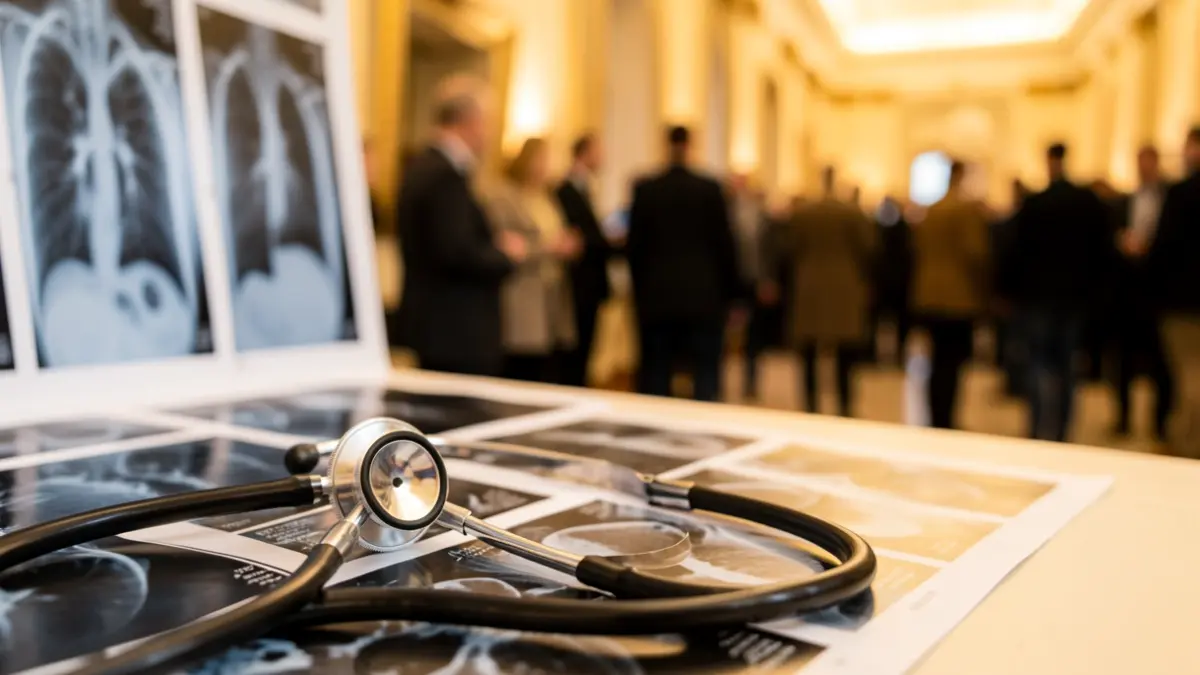
Coordination between primary care and the hospital has enabled the creation of a system that not only speeds up the detection of this serious rare respiratory disease but also improves the prognosis for those affected, according to a study led by the hospital, the ICS Delta Primary Care, and IDIBELL.
Family doctor Ferran Ferrer highlights the model's simplicity and effectiveness: "It is a simple and effective operational model that avoids months, or even years, of going through different consultations before reaching specialized care".
This rapid circuit, already successfully tested in the Barcelona Metropolitan South Health Region, includes specific training for primary care professionals to identify warning signs, direct coordination between radiology and the Bellvitge Pulmonary Interstitium Unit, and a priority referral that guarantees a first hospital visit within a month.
A comparative study of 726 patients showed that those referred through the priority circuit arrived at the hospital with 90% lung capacity, compared to 76% of patients on the usual circuit. Furthermore, survival without transplant seven years after diagnosis is 14% higher in patients diagnosed via the rapid pathway (57%) compared to those on the conventional circuit (44%).
Pulmonologist Guadalupe Bermudo emphasizes that the model is based on "three key pieces that work well together": specific primary care training, a direct and clear referral pathway, and a specialized unit with defined protocols. Additionally, the incorporation of artificial intelligence for early detection through medical imaging is being explored.
Family doctor Elisabet Serra welcomes that the circuit offers "clear tools and criteria to identify suspicious cases and refer them immediately," avoiding "all kinds of intermediaries" to ensure prompt attention at the specialized unit.
Pulmonary fibrosis is a rare disease that causes progressive scarring of the lungs, making breathing increasingly difficult. Initial symptoms are often confused with other respiratory conditions, delaying detection. In Spain, it affects approximately 20 men and 13 women per 100,000 inhabitants.