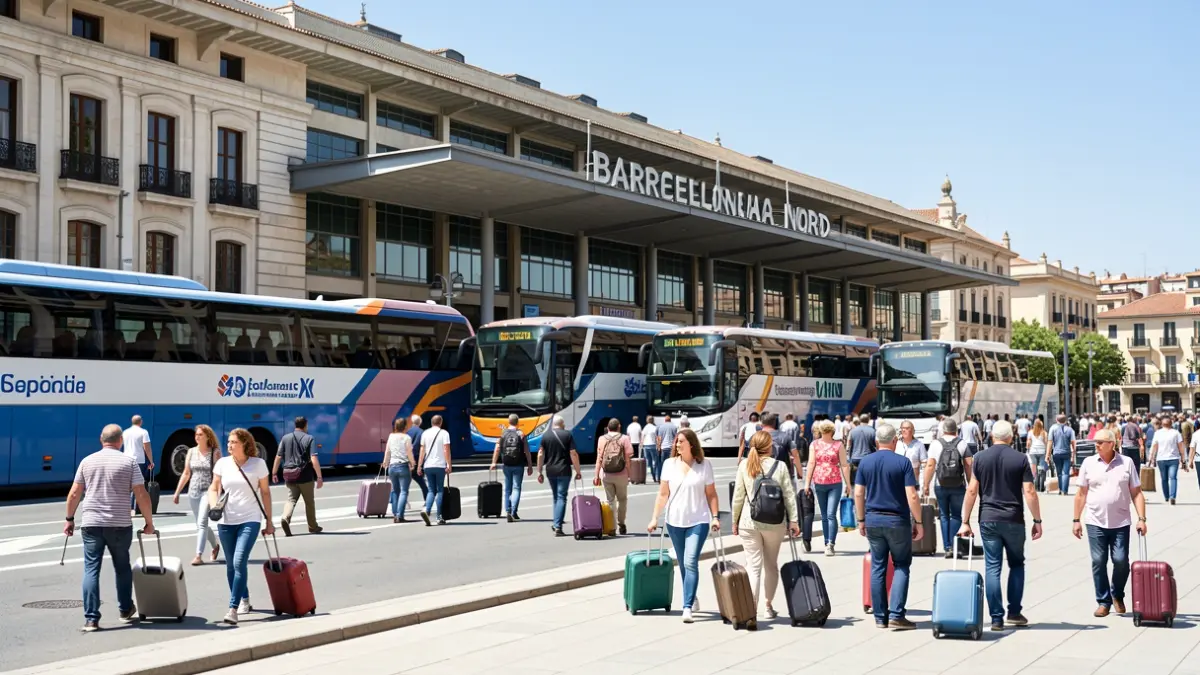
The Barcelona Nord station has emerged as a central point for international coach travel, particularly among students and tourists. The wide array of nationalities passing through the terminal underscores its growing importance as a hub for European connections.
Many travelers highlight cost as the primary reason for choosing coaches over other transport methods. The ability to carry luggage more affordably, without extra check-in fees, is another frequently mentioned advantage. For long journeys, especially overnight trips, some passengers have managed to save the cost of two hotel nights.
Despite the preference for budget-friendly options, some passengers express concerns about luggage security, referencing viral social media videos that warn of thefts from coach compartments. Consequently, some travelers opt to place their luggage at the back of the storage area.
The punctuality of international coaches is generally satisfactory, although isolated incidents have occurred, such as buses departing earlier than scheduled, forcing passengers to purchase new tickets. Journeys to destinations like Tangier, Casablanca, or Rabat can last up to 24 hours, including mandatory stops for driver rest.
User profiles range from students prioritizing ecology and price, like a young person traveling from Paris to Barcelona for 35 euros, to travelers seeking economical accessibility for long-distance journeys, such as a painter traveling from Switzerland to Portugal.
However, some students indicate a preference for other modes like air or train travel, despite their higher costs, when the choice is not theirs to make. A comparison of prices between coaches, planes, and trains for similar routes highlights the significant economic differences, with trains often being the most expensive option.