Despite the years that have passed since the end of the dictatorship, Catalonia still displays a significant number of Francoist symbols. The latest available data indicate the presence of 2,069 elements in monuments, street signs, cemeteries, and housing plaques, among other locations. These figures primarily come from the Banc de la Memòria Democràtica, with data from the entire territory except Barcelona, and from the municipal census of the Catalan capital, last updated in 2010.
In total, the censuses record 4,217 symbols, of which 2,148 have already been removed. A quarter of the remaining symbols are intact, as they were during the Franco regime. Among the elements that still endure is the controversial monument in Tortosa, the removal of which has been the subject of judicial litigation.
Within the framework of the democratic memory law's processing in the Parliament, it has become clear that 1,078 elements remain unaltered. The rest have been modified, signposted, or reinterpreted. Approximately fifty cases correspond to vandalized or destroyed symbols. It is noteworthy that over a third of these symbols date back to the 1950s.
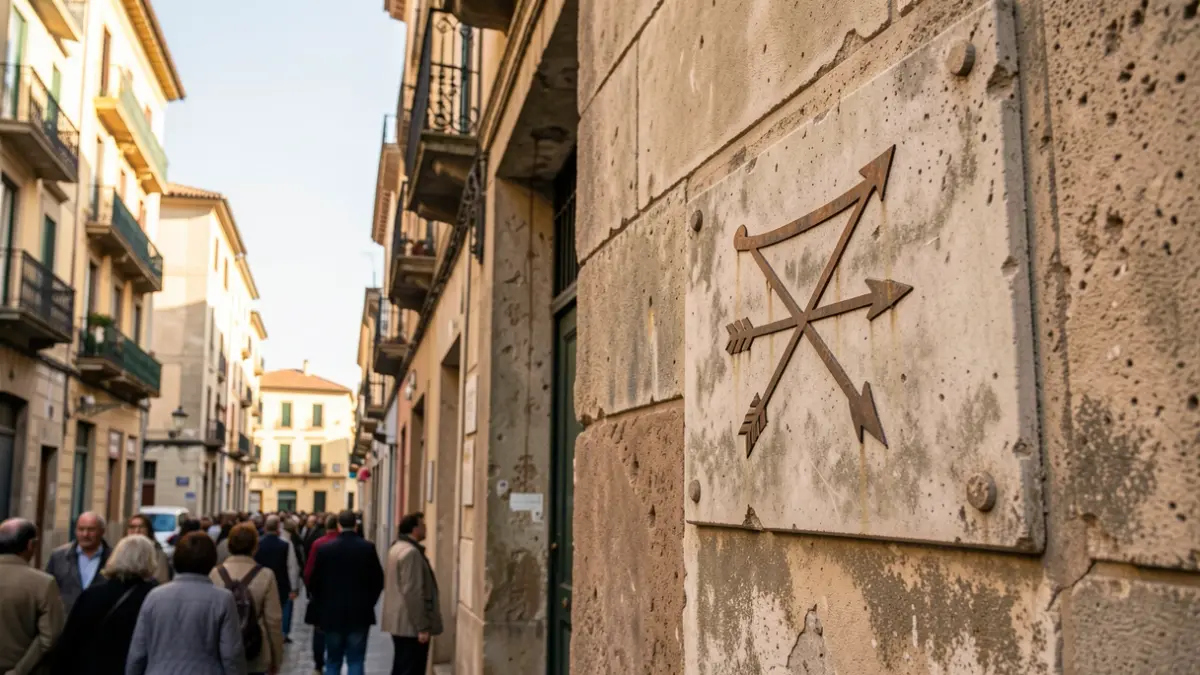
Housing plaques, featuring the yoke and arrows symbol and the acronym INV (Instituto Nacional de la Vivienda), are the most common type of non-removed Francoist symbol, representing 78.2% of the total. Other vestiges include reliefs, engravings, inscriptions, monuments, crosses, street signs, tombs and headstones, graffiti, and forges.
The monument in Tortosa, erected in 1966 and inaugurated by dictator Francisco Franco, is one of the most emblematic and controversial. Standing nearly 30 meters tall, its removal has generated multiple judicial fronts, including appeals against the tendering of works and the validity of the demolition license, which is still pending judicial decision.
Besides the Tortosa monument, the Banc de Memòria Democràtica census identifies 66 more monuments across municipalities, cemeteries, and roadsides. In Banyoles, a monument with a cross in the cemetery was reinterpreted to commemorate all the deceased. Similar examples can be found in the cemeteries of Premià de Mar, Viladecans, Reus, Girona, as well as roadside monuments in Lliçà d’Amunt and Calldetenes.
In urban areas, Tarragona has a three-meter monument with the Francoist coat of arms, while Terrassa retains the monument to Alfons Sala, honored at the beginning of the dictatorship. Some monoliths, like the one dedicated to the fallen in Sant Boi de Lluçanès, have been converted into public fountains.
The municipalities with the most unremoved Francoist symbols are Banyoles (194), Reus (189), Palamós (169), Barcelona (160), Sabadell (122), and Girona (118). In Banyoles and Reus, the majority are housing plaques, with a few exceptions of street signs and monoliths.
By region, Barcelonès (265) leads in the number of symbols, followed by Baix Empordà (229), Pla de l’Estany (197), Baix Camp (192), Vallès Occidental (187), and Baix Llobregat (158).
In Barcelona, the City Council's census indicated 231 symbols in 2005, mainly reliefs and housing plaques. By 2007, the figure had reduced to 160, with a significant removal in the Nou Barris district. Currently, Sant Martí is the district with the most elements, followed by Nou Barris.
Overall, it is estimated that 51% of the 4,217 registered Francoist symbols have been removed. This removal has primarily affected housing plaques, with municipalities such as L'Hospitalet de Llobregat (439), Lleida (365), Tarragona (188), and Cornellà de Llobregat (102) accumulating half of the plaques removed from public spaces.
About a dozen monuments have also disappeared, such as the one at Coll del Moro in Gandesa, which bore the Francoist coat of arms and the slogan 'Una, grande y libre'. Other removed elements include stone blocks in Les Franqueses del Vallès and monuments in Vilassar de Dalt.