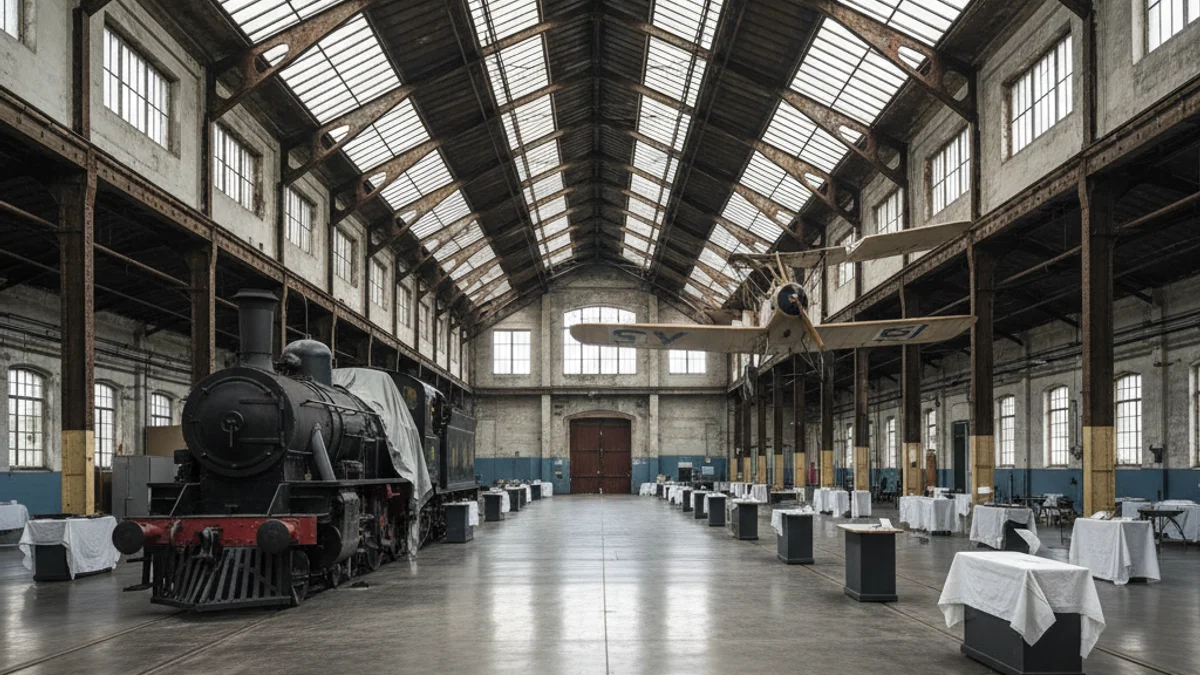
The Associació Coordinadora Pro Museu del Transport, which gathered over 4,000 signatures, insists the museum should be housed in the Palau de Comunicacions i Transport at Fira de Barcelona, a 16,000-square-meter space that hosted a similar exhibition during the 1929 International Exposition.
However, Deputy Mayor Laia Bonet informed the promoters on January 16 that the Fira location is unfeasible due to planned remodeling, which includes the construction of 500 public housing units. The City Council instead proposes a 3,000-square-meter space on the Vall d'Hebron slab, near the TMB Sant Genís depots, promoting it as a new city hub.
“"What they offer us is not a museum. Nothing fits there."
Manuel Marina called the government's move to preempt the debate a “lack of democratic hygiene.” Opposition groups are also critical. Francina Vila (Junts) warned that the proposal is merely “a TMB museum, a partial counter-proposal,” while Pau Gonzàlez (Barcelona en Comú) criticized the lack of prior consultation with residents and promoters.
Daniel Sirera (PP leader) openly defended the Fira location, accusing Mayor Collboni of “lowering Barcelona's aspirations.” Meanwhile, the Vall d'Hebron Neighborhood Association, led by Manuel Pérez, voiced concerns that the project should not lead to the loss of essential neighborhood facilities, such as the expansion of the health complex.