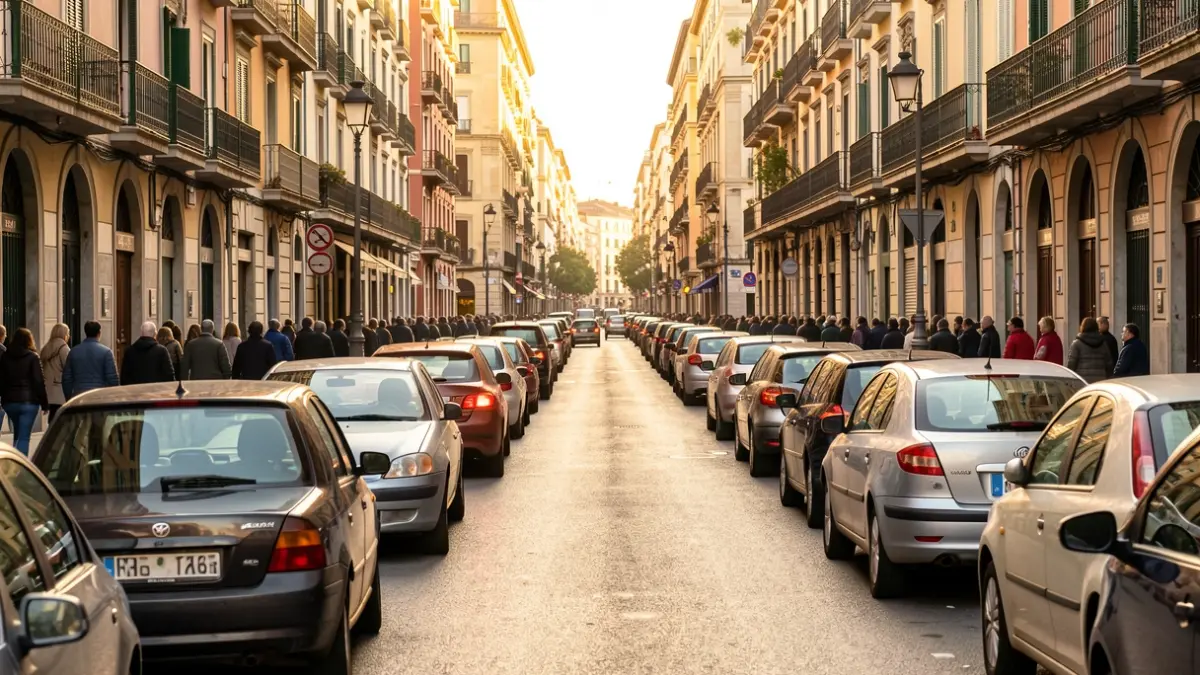
Barcelona could lose between 5,200 and 8,600 on-street parking spaces by 2040 due to the relentless growth in the size of new cars. The city currently has approximately 90,200 spaces, including blue zones, green areas, and unregulated parking.
This trend, which also affects Madrid with a projected loss of 41,000 spaces, is a conclusion from a study by Transport&Environment and Clean Cities, non-governmental organizations promoting sustainable mobility. The report concludes that between 8.5% and 14% of parking spaces in European cities are at risk if vehicle sizes continue to increase uncontrollably.
The organizations point out that despite the decrease in family size and car occupancy, manufacturers are prioritizing the production of larger vehicles for greater profits. The average length of cars has risen from 4.09 meters in 2000 to the current 4.38 meters, and the width has increased from 1.69 to 1.82 meters. Vehicle height and bonnet height are also increasing.
Transport&Environment advocates for public policies that encourage a "proper resizing" of vehicles, returning to lengths around 4.25 meters. They believe the current trend towards larger cars poses a safety risk to pedestrians, cyclists, motorcyclists, and moped riders, potentially causing an additional 400 deaths on European roads by 2040.
The study also highlights the danger posed by the increasing height of bonnets, which are projected to reach an average of 86.2 cm by 2040, particularly for children, as they are not visible from the driver's seat and impacts are received on the head or torso.
T&E's Spain Director, Isabell Büschel, regrets that cities "are increasingly dominated by huge SUVs that pose a physical danger to other users," and that municipalities are pressured to expand parking spaces at the expense of public space.
The coordinator of Clean Cities in Spain, Carmen Duce, suggests strategies like those being considered in Paris, which is looking at differentiated parking fees for a fairer redistribution of limited space.