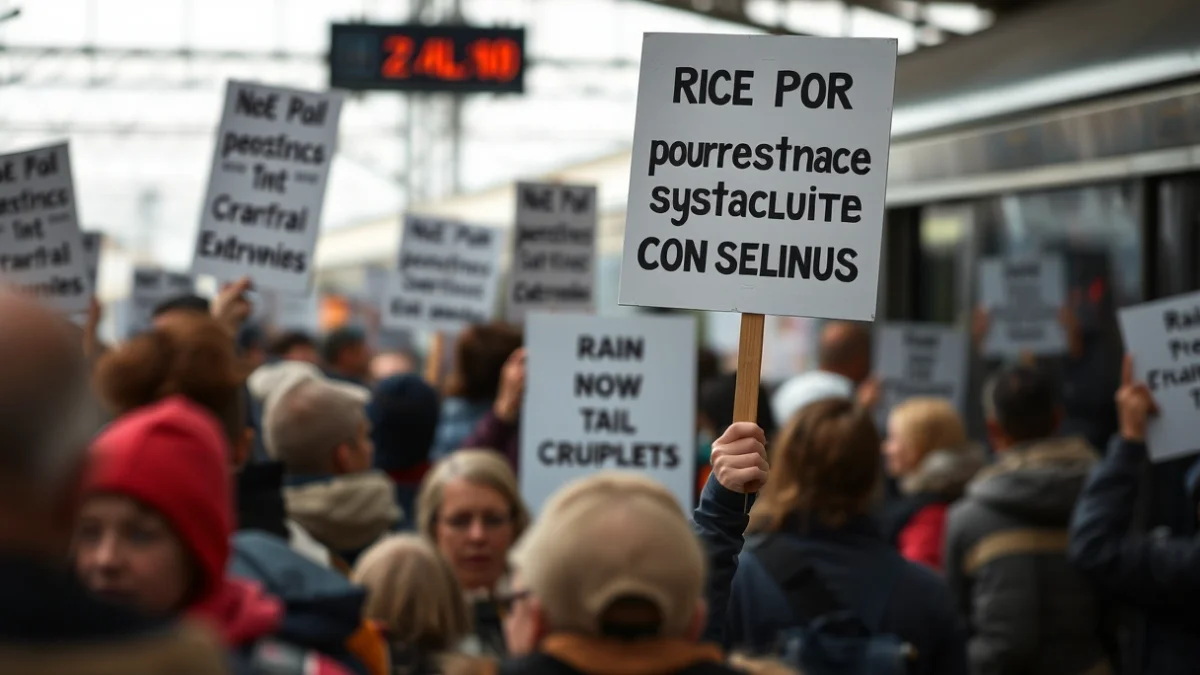
The mobilization, called by twenty entities, was presented as “apolitical,” although it coincided with the independence march organized earlier in the day by the ANC and the Consell de la República. This timing generated strong controversy, with critics citing potential “counter-programming.” Despite its declared neutrality, representatives from parties like Junts, ERC, Vox, and the PP attended the protest.
The central slogan of the protest was “No future without trains,” aiming to denounce the “systematic underinvestment” in railway infrastructure and the “poor governance of the system” by Adif, Renfe, and the respective governments. Demonstrators avoided directly linking the problem to dependence on Spain, focusing instead on the management of the operators.
“"The situation of Rodalies is deplorable; it is a burden on the social and economic development of the country."
The manifesto calls for a “change of scale in investment and a radical change” in the management of the railway system. Spokespersons for the entities, supported by over a hundred associations, demanded “certainty and security” and a “decent and reliable service,” emphasizing that the mobilization should serve as a “revulsive” to force an “absolute change” in the quality of public transport.