A study published in Nature Medicine estimates that temperature-related deaths in Europe could exceed 2.3 million between 2015 and 2099, with Barcelona topping the list of most affected cities. The Barcelona Public Health Agency (ASPB) recorded 370 deaths attributable to extreme climate in 2025, with a 44% increase in risk during intense heatwaves.
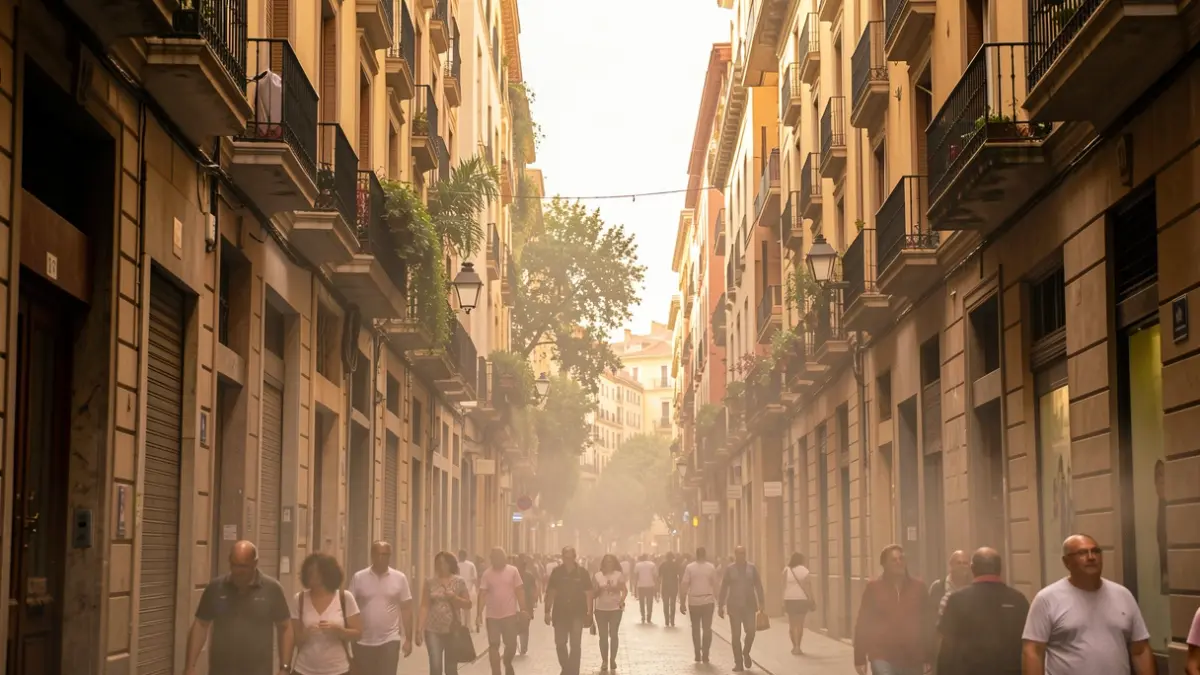
According to the Climate Change Vulnerability Index (IVAC) developed by the Institut Metròpoli, El Raval is the area of the city most affected by high temperatures. This index considers sociodemographic, economic, urban, and energy variables to analyze the adaptation capacity of different areas.
The neighborhood stands out for its low economic level and a high percentage of foreign-born population (67% born outside Spain), factors that hinder preparation and recovery from climate impacts. Its second-lowest average income in the city (14,700 euros) and high population density, along with scarce vegetation, worsen the situation.
The combination of these factors makes El Raval particularly exposed to extreme heat. Urban green spaces are key to mitigating these effects, as they remain on average 1.6°C cooler, according to various scientific studies.
In 2025, the meteorological station in El Raval recorded 74 tropical nights (over 20°C) and 36 torrid nights (over 25°C), a significant increase compared to previous years.