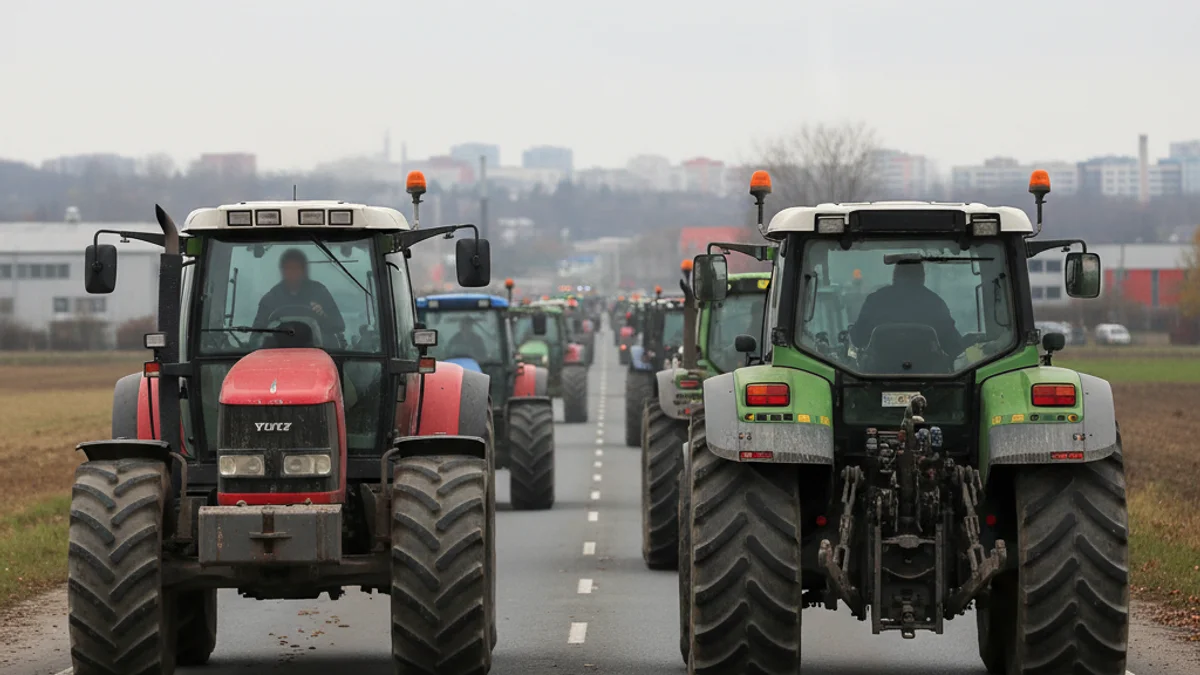
The primary sector mobilizations began early in the morning, coinciding with the ongoing service problems affecting the Rodalies rail network. The farmers from the Girona column were the earliest, setting off around 7 a.m. with about twenty tractors, deliberately avoiding the AP-7 motorway to prevent further traffic issues.
“"We set out with great enthusiasm to remind the Government that there are still pending commitments for the sector."
The Girona column traveled along the N-II and the C-35, passing through Hostalric and Sant Celoni, before reaching Granollers. There they merged with columns from Vallès and Central Catalonia, totaling dozens of tractors that continued along the C-17 to the entrance of Barcelona via Meridiana Avenue.
The Farmers' Guild emphasized that the strategy of avoiding the motorway and using secondary roads was a gesture of solidarity with commuters affected by the rail crisis. This decision aimed to ensure vehicles could access the city without interfering with train lines, especially the R11.
“"We will not stop demanding what is fair and necessary for the farming community and the territory."
Other regions, such as Camp de Tarragona and Terres de l’Ebre, opted for a more symbolic mobilization, using only about ten vehicles without tractors to peacefully mark the anniversary of the mobilization. Meanwhile, from Sant Fruitós de Bages, a column of livestock farmers entered the Catalan capital via the Túnels de Vallvidrera and Via Augusta, including young participants like Jordi Bosch, aged 17.