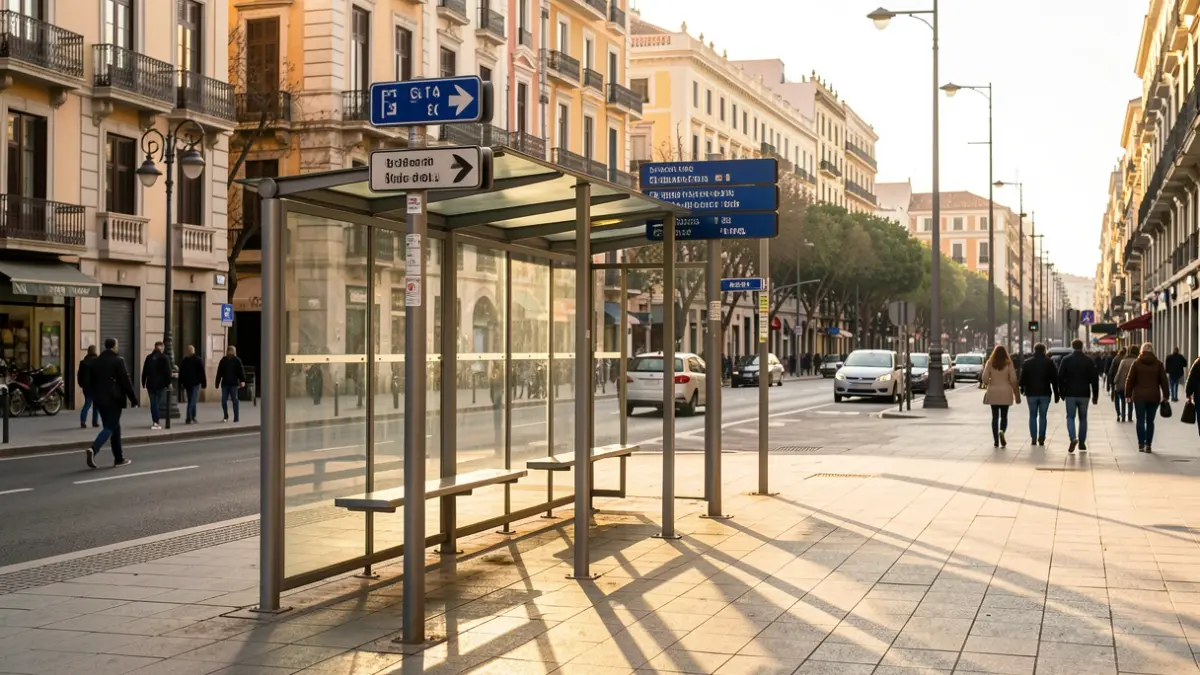
The Rodalies crisis has led to a significant increase in bus demand as a mobility alternative, saturating key points in Barcelona such as Fabra i Puig, Gran Via, and the Maria Cristina area. To alleviate this situation, 10 additional stops have been added to the Diagonal corridor, increasing the total from 13 to 23.
This measure, effective Monday, July 27, aims to reduce the number of buses per stop and space them out to ease traffic and queues. Users will only notice a slight relocation of their usual stop. Previously, some stops accumulated up to 40 lines; with the new distribution, the maximum will be 20. Double stops are planned to speed up passenger boarding and alighting.
The Deputy Mayor for Mobility, Laia Bonet, acknowledged that the city's infrastructure cannot keep up with the demand for interurban public transport. This initiative, termed "phase zero," is part of an 8 million euro plan with about twenty actions planned for other corridors like Meridiana or Gran Via.
The Director General of Transport and Mobility of the Generalitat, Susi López, detailed that during peak hours, around 200 buses can be found on the Diagonal, approximately three per minute. The reorganization will distribute stops into three groups based on final destinations. The association Promoció del Transport Públic (PTP) positively views the initiative, though considers it "timid".
The intervention is "low-cost," with a budget of around 6,000 euros for moving elements like information panels and stop poles. The representative from Territori defended the "dual offer" as essential while rail system reliability is not fully restored. Both administrations agree on the long-term need for major interchange hubs.